The spring of 2026 has sent a clear message to water managers across Canada: the “Spring Freshet” is no longer a predictable seasonal transition, but a high-velocity “pulse” that is testing the limits of municipal infrastructure. From the Saskatchewan River Basin to the Ottawa Valley, a combination of late-season snowpack and rapid warming has triggered a wave of flood warnings, forced 24-hour infrastructure monitoring, and reignited debates over how Canada manages its most critical liquid asset.
The 2026 Pulse: A National Overview
As of late April 2026, the Water Security Agency (WSA) in Saskatchewan reports that while the south has completed its melt, central and northern regions are facing “well-above-normal” snowpack levels—up to 1.5 times the seasonal average in some basins. This mirrors conditions in Greater Sudbury, where a Flood Warning remains in effect for major systems like the Whitson River, which saw water levels rise by as much as 70 cm in a single day at the peak of the melt.
The common thread in these alerts is the “Concrete Effect.” When record snowmelt meets spring rain on frozen or saturated ground, the earth acts as an impermeable surface. In Ottawa-Gatineau, the Rideau Valley Conservation Authority (RVCA) indicates that while levels in the upper watershed are beginning to stabilize, the Lower Ottawa River has remained under a Flood Watch, with water levels reaching thresholds historically seen during significant flood events in areas like Constance Bay.
From Emergency Response to Passive Resilience
For years, the standard response to the freshet has been reactive: sandbags and “River Watch” level monitoring. However, the current crisis is pushing cities to adopt more sophisticated, data-driven strategies:
- Real-Time Infrastructure Management: In Sudbury, city crews have worked 24 hours a day to manage increased pressure on wastewater systems caused by snowmelt infiltration.
- Digital Twin Mapping: The District Municipality of Muskoka has deployed its GeoHub Floodline and LiDAR Mapping 2.0, allowing residents and engineers to visualize flood impacts in 3D and monitor lake levels in real-time.
- Sponge City Infrastructure: Professionals are increasingly looking to Low Impact Development (LID) to take the “top off” the peak flow. By using bioswales and permeable surfaces, cities can delay the timing of runoff, preventing the “wall of water” effect seen in complex systems like the Muskoka River.
The Funding and Policy Shift
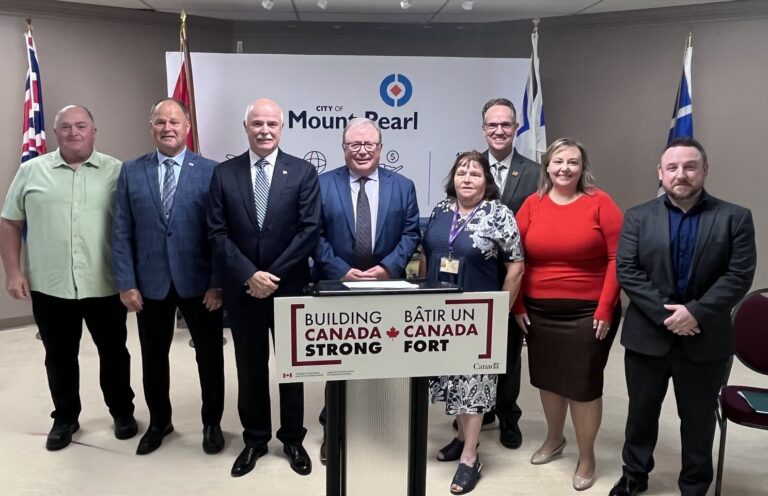
The 2026 freshet coincides with a massive shift in how water infrastructure is funded and governed across Canada. At the federal level, the Build Communities Strong Fund—a $51-billion program—is now deploying capital to unlock housing by addressing infrastructure bottlenecks. A prime example occurred on April 7, 2026, when the government allocated $28 million to St. Albert, Alberta. This funding is earmarked for the Northeast Servicing Project, a critical expansion of over 2,000 metres of storm mains and a new outfall to the Sturgeon River.
Simultaneously, provincial governance is undergoing intense friction. In Ontario, the debate surrounding Bill 60 (the Fighting Delays, Building Faster Act, 2025) has reached a fever pitch. The legislation introduces the Water and Wastewater Public Corporations Act, which allows the province to designate corporations to provide services on behalf of municipalities. While some leaders in regions like Niagara have discussed these moves as a path to modernization, critics remain focused on the implications for public oversight and asset control.
On the ground, regional coordination remains the primary line of defense. The RVCA and similar agencies have shifted their focus toward high-frequency “Water Safety Statements.” These updates go beyond simple alerts; they provide technical guidance on ice jam prevention and proactive culvert clearing. These measures are being framed not just as maintenance, but as the essential primary defense against the rapid, high-volume melt that characterizes the 2026 season.
The Verdict
For Water Canada readers, the lesson of 2026 is that infrastructure must be designed for volatility, not averages. The $28 million investment in St. Albert is a blueprint for the future: integrating stormwater expansion into the very beginning of urban growth plans rather than retrofitting after a flood.
As Sudbury’s Director of Natural Hazards, Phillipa Cryderman, noted in recent alerts, the water content in this year’s snowpack has reached roughly 1.5 times the seasonal average. In this “New Normal,” the goal is no longer just to move water away as fast as possible, but to manage the energy of the freshet through smart, resilient design.