Leaf litter is a well-established source of urban phosphorus. The harder engineering problem is intercepting it before it reaches the receiving water. A catch basin insert does exactly that — and one product, the EnviroPod™ LittaTrap™, North America’s leading catch basin filter insert with more than 80,000 installations globally, has now earned a formal credit in Canada’s most advanced phosphorus regulatory framework.
Phosphorus and Canadian Lakes
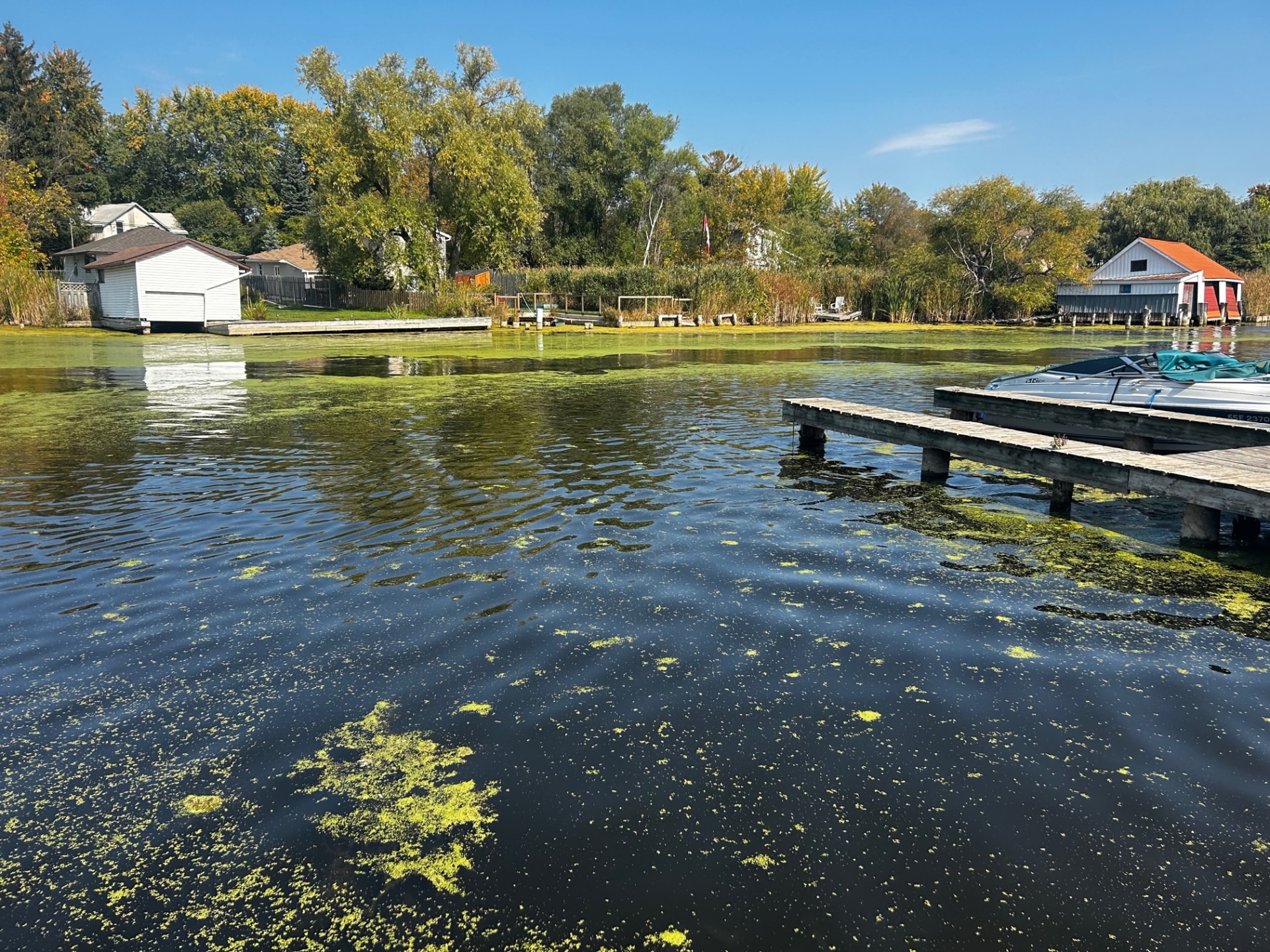
Eutrophication driven by excess phosphorus is one of the most widespread water quality problems in Canadian freshwater lakes. From the Muskoka Lakes to Okanagan Lake to Lake Winnipeg, elevated phosphorus concentrations are causing algae blooms, depleting dissolved oxygen, and degrading lakes that communities depend on.
Phosphorus acts as the limiting nutrient in most Canadian freshwater lakes — control the load, and you control the algae. Blooms block sunlight, cause taste and odour problems at drinking water intakes, and when the algae die, bacterial decomposition consumes the dissolved oxygen fish need to survive. Once phosphorus accumulates in lake sediments, internal loading sustains blooms for years after external inputs are reduced.
This is a particular problem in shallow inland lakes, which heat up faster in summer than deeper systems. Warmer water accelerates the release of phosphorus from bottom sediments, compounding the effect of external loading and making shallow lakes disproportionately sensitive to every kilogram of phosphorus that enters from the catchment. Managing urban stormwater phosphorus at the source is therefore one of the highest-value interventions available to engineers and municipalities.
Leaf Litter as a Phosphorus Source: Quantifying the Gross Organic Fraction
The contribution of leaf litter and organic debris to urban phosphorus loading is well documented. A mature deciduous tree produces 15 to 25 kg of litter per year at 0.1 to 0.3 percent phosphorus by weight. That material accumulates along kerb lines and around drain grates between rainfall events. When rainfall mobilises it into the stormwater system, the pipe transports it to the receiving water, where decomposition releases phosphorus in dissolved form.
Stormwater autosamplers collect suspended sediment and dissolved pollutants from the water column within a pipe, but leaves and other coarse organic material can flow past the sampler intake without being collected. As a result, the gross organic phosphorus fraction may be systematically underrepresented in the monitoring data that engineers and regulators rely on.
The USGS quantified this directly in a paired-catchment study in Madison, Wisconsin. Without leaf management, autumn leaf litter accounted for 56 percent of the annual total phosphorus load in urban stormwater. Active leaf removal before rainfall events reduced total phosphorus loads by up to 84 percent.
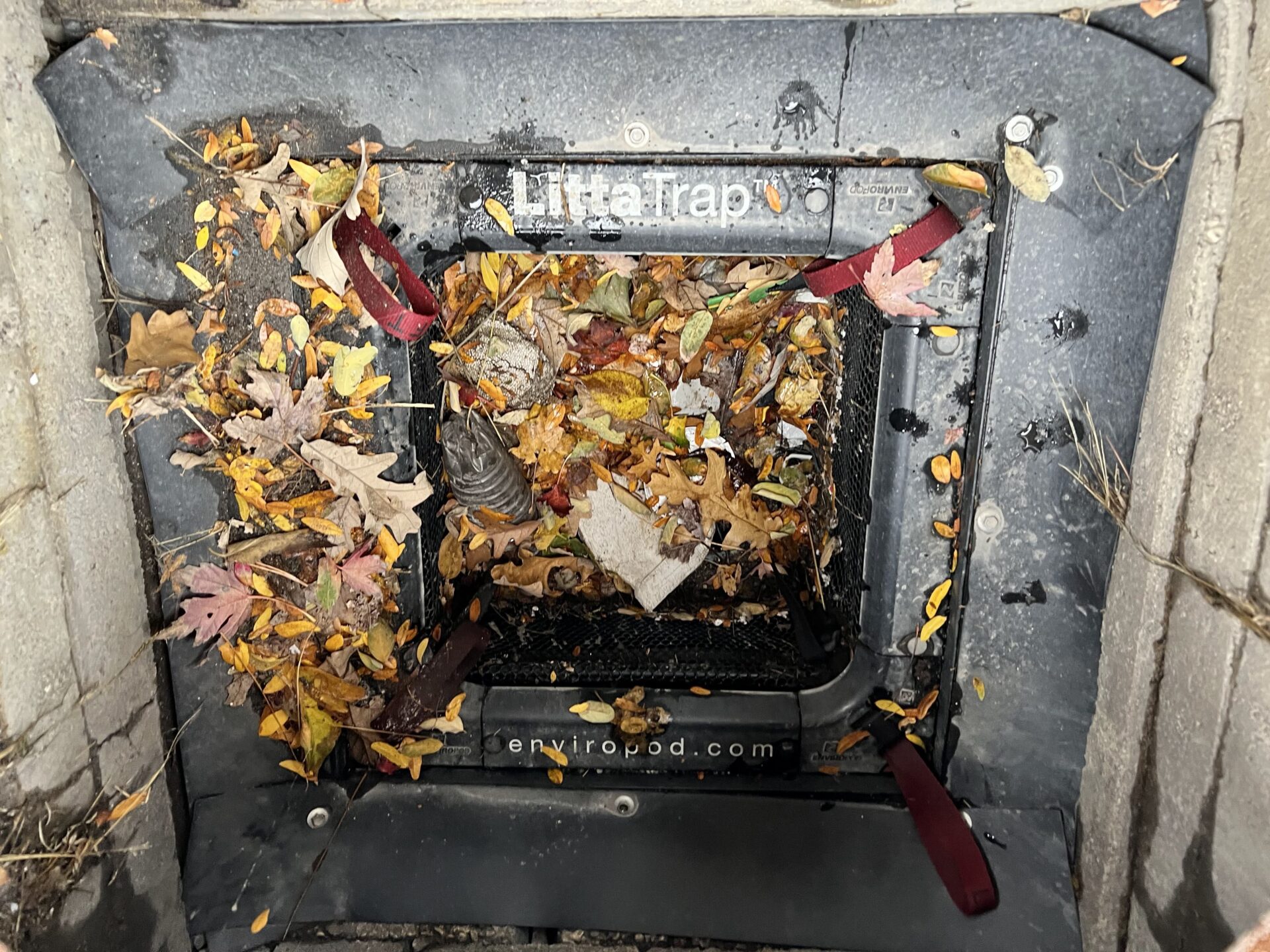
The design implication: intercepting leaf litter at the catch basin is more effective than attempting to remove the dissolved phosphorus it releases after it has reached the lake. Once leaves decompose in the receiving water, the phosphorus they contain is in its most bioavailable form and the most difficult to manage.
LittaTrap™: Source Control with a Formal Phosphorus Credit
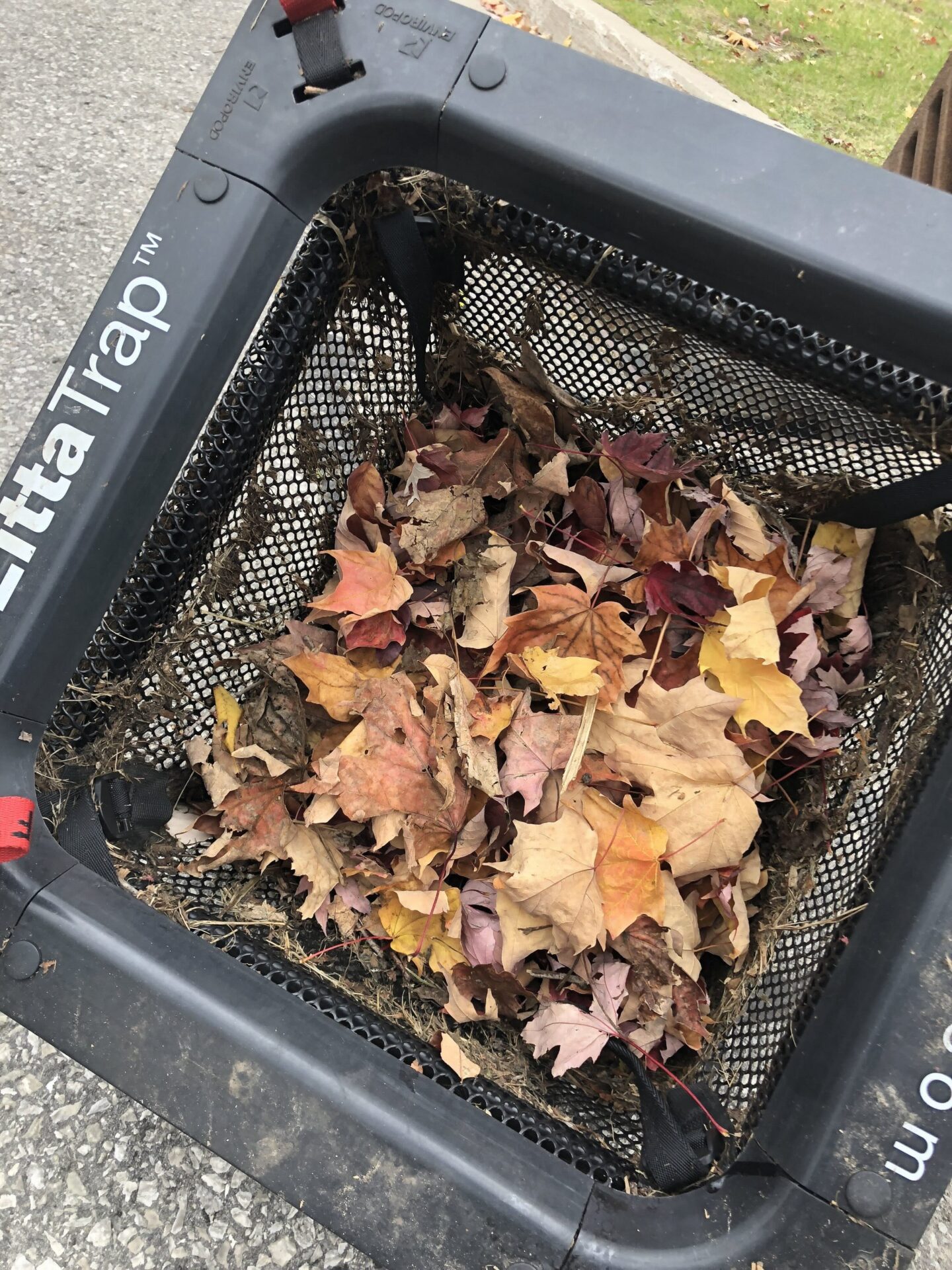
The LittaTrap™ is a basket-type catch basin insert by EnviroPod™ that sits in the catch basin below the grate. Stormwater runoff passes through, and leaf litter, sediment, and gross organics are retained.
The key design feature for phosphorus removal is dry retention: the basket holds captured material above the sump water level. Organic material stays dry, and phosphorus remains bound in the solid fraction. At each maintenance visit, the basket is easily lifted, emptied, and returned. The captured load — and the phosphorus within it — is physically removed from the watershed before it reaches the receiving water.
Following multi-year field monitoring in the Lake Simcoe watershed, LittaTrap™ is listed in Appendix E of the LSRCA Technical Guidelines for Stormwater Management Submissions (January 2026) as an accepted BMP with a defined phosphorus removal credit of 0.014 kg per trap per year.
That credit is mass-based and fixed, not a percentage removal rate. It is entered unit-by-unit into the approved M.O.E. Lake Simcoe Phosphorus Budget Tool without requiring site-specific monitoring at the design stage.
The Field Data Behind the Credit
The 0.014 kg/trap/year credit is derived from field monitoring across three municipalities in the Lake Simcoe watershed. Fourteen units in the Town of Georgina were monitored over 21 months; a field programme ran in the City of Barrie; and 32 units were monitored in Bradford West Gwillimbury over 12 months.
Annual material capture averaged 25 kg per unit across all three programmes. Laboratory analysis showed an average total phosphorus concentration of 567 mg/kg, peaking in October at the height of leaf drop. The arithmetic: 25 kg/unit/year × 567 mg/kg ÷ 1,000,000 = 0.014 kg/trap/year.
Scaled across a municipal drainage network — where catch basin densities typically run one unit per 0.2 to 0.5 hectares of urban catchment — the aggregate annual removal becomes significant. The consistency of results across different municipalities, canopy densities, and monitoring periods confirms this is not a best-case result. It is the average from real urban drainage networks under normal operating conditions.
For engineers in the Lake Simcoe watershed: the 0.014 kg/trap/year credit reduces the post-development phosphorus load directly in the M.O.E. Budget Tool. Every unit specified narrows the gap subject to the Phosphorus Offsetting Fee, calculated at a 2.5:1 ratio on the residual load difference.
Applicability Across Canada
The LSRCA credit framework is jurisdiction-specific. The phosphorus mechanism is not. Leaf litter accumulates on urban streets wherever deciduous trees are present, and the same transport pathway operates in any Canadian city with storm drainage discharging to a sensitive receiving water.
Lake Winnipeg has seen algae bloom frequency increase significantly over three decades, driven by phosphorus loading from a watershed spanning four Canadian provinces and four U.S. states. Okanagan Lake is phosphorus-limited: phosphorus directly controls algae growth across the valley’s lake system. In Nova Scotia and New Brunswick, lake eutrophication from urban and agricultural runoff is a recognised concern.
Many of these water bodies are shallow inland lakes that heat up rapidly in summer, accelerating sediment phosphorus release and amplifying the effect of every unit of external load that reaches them. Reducing that external load at the source — before organic material reaches the receiving water — is the most cost-effective point of intervention available to urban stormwater engineers.
Maintenance and Treatment Train Position
LittaTrap™ removes phosphorus only when captured material is physically removed from the device. Two service visits per year are standard: one in late spring to clear winter sediment, and one in late autumn after leaf fall — the highest-load, highest-concentration period of the year.
In a treatment train, LittaTrap™ should be placed upstream of any oil grit separator, hydrodynamic separator, bioretention cell, or stormwater pond. This source-control-first approach has become a defining principle of modern stormwater management because it protects downstream assets, improves long-term performance, and reduces whole-of-life maintenance costs across the entire system.
Leaf litter reaching a wet sump absorbs water and releases dissolved phosphorus into passing flows. Organic material reaching bioretention media accelerates clogging and reduces infiltration performance. Material accumulating within ponds contributes to sediment build-up and additional cleanout costs over time. Removing gross organics at the catch basin protects downstream infrastructure and reduces whole-of-system maintenance costs.
Conclusion
The gross organic fraction of urban stormwater phosphorus loading is substantial and largely preventable with source control at the catch basin. Leaves transported by stormwater to the receiving water decompose and release phosphorus, fuelling algae growth — a process that runs faster and harder in the shallow, warm inland lakes that characterise much of Canada’s recreational and drinking water resources.
LittaTrap™ intercepts that material before it reaches the water, with a field-validated removal rate of 0.014 kg per trap per year, formally recognised in Canada’s most advanced phosphorus regulatory framework.
For engineers designing phosphorus budgets in the Lake Simcoe watershed, that credit is a directly usable design tool. For engineers working in other phosphorus-impaired watersheds across Canada, the underlying field data make a strong case for inclusion in any urban source control strategy.
For municipalities seeking practical and scalable phosphorus-reduction tools, source-control technologies such as EnviroPod’s™ LittaTrap™ offer a simple intervention that can be replicated thousands of times throughout an urban drainage network, turning individual catch basins into measurable water-quality assets.
For more information on the Phosphorus Credit (and references to this data) or the LittaTrap™:
Contact: Barry Irwin, Great Lakes Region Area Manager, EnviroPod™