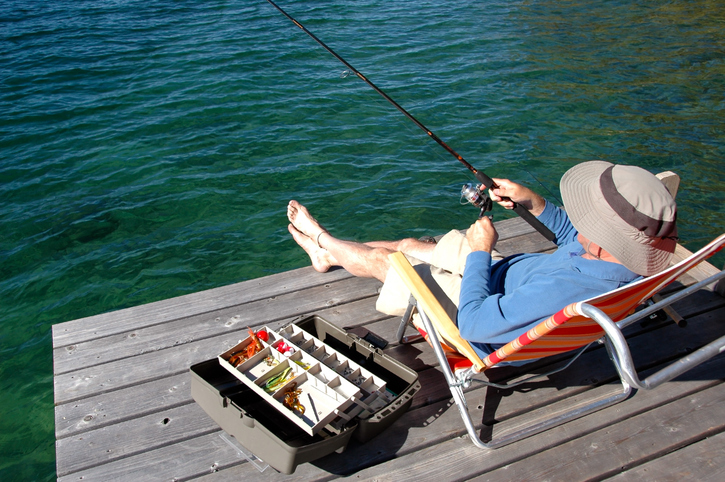
TORONTO, ON — As the summer angling season peaks across the country, a new report from Ducks Unlimited Canada (DUC) warns that invasive species are significantly altering aquatic ecosystems, threatening both native fish populations and the recreational fishing industry.
The report highlights two primary invaders driving severe habitat degradation across Canadian waterways: the common carp (Cyprinus carpio) and invasive Phragmites (common reed). According to DUC researchers, these species disrupt the delicate balance of shallow-water wetlands, which serve as vital spawning grounds and nurseries for popular native sportfish like northern pike and yellow perch.
The underwater bulldozer effect
While common carp have been present in North American waters for over a century, their growing populations continue to severely impact aquatic environments. Paige Kowal, a research biologist with DUC’s Institute for Wetland and Waterfowl Research, explains that the fish fundamentally alter the physical dynamics of shallow waters.
“Through their feeding habits, they get into these shallow water environments and they almost act like little bulldozers along the bottom,” says Kowal. By sucking up organic material and spitting sediment back into the water column, carp reduce light penetration and uproot critical aquatic vegetation.
This loss of water clarity and plant life strips native predatory fish of the sheltered areas their young require to survive their first season, often allowing carp to become the dominant species in compromised systems.
Choked shorelines restricting access
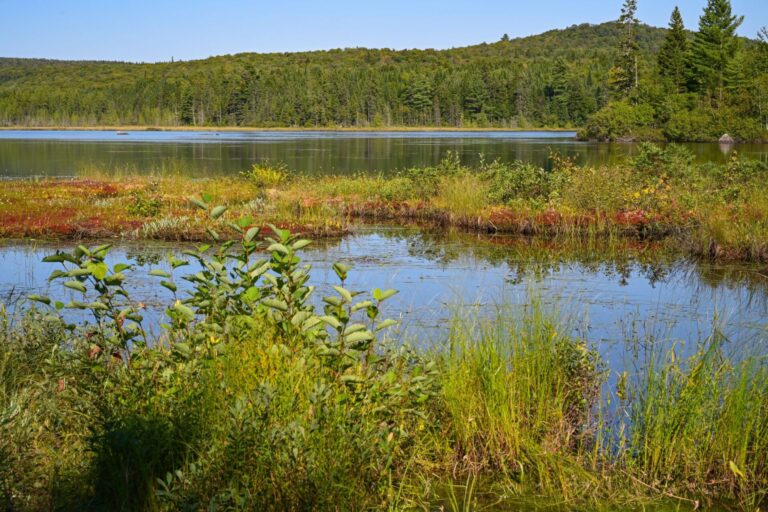
Above the water’s surface, the threat shifts to invasive Phragmites. Originally from Europe, this aggressive, tall grass is rapidly transforming shorelines and wetlands, particularly across Ontario, Quebec, and the Atlantic region.
Matthew Bolding, a conservation programs specialist with DUC in Ontario, notes that Phragmites quickly reduces highly biodiverse wetland communities—often home to 50 or 60 different plant species—down to a monoculture of just two or three. Growing up to 20 feet tall with dense underground root systems, the plant starves out native vegetation and leaves no physical space for fish to navigate.
“When phrag moves in, it’s just super high-density stems, so there’s no space for any of those other plants,” Bolding states, adding that the plant also diminishes water circulation and the numbers of aquatic invertebrates that fish rely on for food.
Deploying technology and biocontrol solutions
To combat these ecological threats, Ducks Unlimited Canada is deploying a mix of traditional infrastructure and cutting-edge technology.
In Manitoba’s Delta Marsh, DUC successfully pioneered “Restoring the Tradition,” an initiative utilizing carp exclusion structures equipped with bar screens. The structures successfully blocked large carp from entering the marsh during spring spawning, leading to a measurable recovery in water clarity, native vegetation, and local waterfowl populations.
In Ontario, DUC is addressing the Phragmites crisis through targeted herbicide applications, mechanical cutting, and biological controls—specifically releasing host-specific moths whose caterpillars weaken the invasive reed from the inside out.
Furthermore, the organization has partnered with software developers to pair drone photography with AI-powered machine learning. High-resolution aerial imagery is scanned by an algorithm to pinpoint exact GPS coordinates of hard-to-spot invasive species, such as European water chestnut, allowing conservation teams to execute precise, manual removals more efficiently.
Water resource managers and conservationists emphasize that maintaining the integrity of these wetlands is crucial, as healthy ecosystems remain the primary foundation for sustainable Canadian fisheries.
For more details on wetland restoration initiatives, visit the original feature on Ducks Unlimited Canada.