Metro Vancouver announced that the First Narrows Crossing, a critical piece of infrastructure that takes drinking water from the North Shore to Vancouver, is back in service and the municipality will revert to Stage 2 water restrictions on July 16.
“We sincerely thank the residents and businesses who reduced their water use while we completed work to upgrade our water supply system,” said Mike Hurley, chair of Metro Vancouver’s Boards. “We are pleased to have this piece of work done on the Stanley Park Water Supply Tunnel Project. However, with hot and dry weather in the forecast and no snowpack to help refill the reservoirs, conservation will still be key to helping the water supply last until the fall.”
In Stage 2, lawn watering will still be prohibited but sprinklers and soaker hoses will be permitted for watering landscaping and trees. Pressure washing by a commercial company will be allowed for aesthetic purposes, residents will be able to top up pools and hot tubs, and washing vehicles and boats will be allowed at home.
To support the project and maintain system pressure while construction was underway for the Stanley Park Water Supply Tunnel, Metro Vancouver implemented Stage 3 water restrictions and set a regional water use target of less than 1.4 billion litres per day. Although usage came close on hot days, spiking at 1.37 billion litres, the 1.4-billion-litre limit was not exceeded.
Construction involved temporarily taking the First Narrows Crossing out of service last October to build a bypass. The First Narrows Crossing is one of the system’s key supply pipes from the Capilano and Seymour reservoirs. Now that the bypass is complete, the crossing is back online and the Stanley Park Water Supply Tunnel construction can continue for the next several years.
The Stanley Park Water Supply Tunnel Project will replace an existing water main that was built in the 1930s and is at the end of its service life. Once complete, the new tunnel and water main will meet current seismic standards, strengthen the resilience of the regional water system, and add capacity to help meet future water demand as the region grows.
The Stanley Park Water Supply Tunnel project is No. 11 on Water Canada’s 2026 Top 50 Projects report.
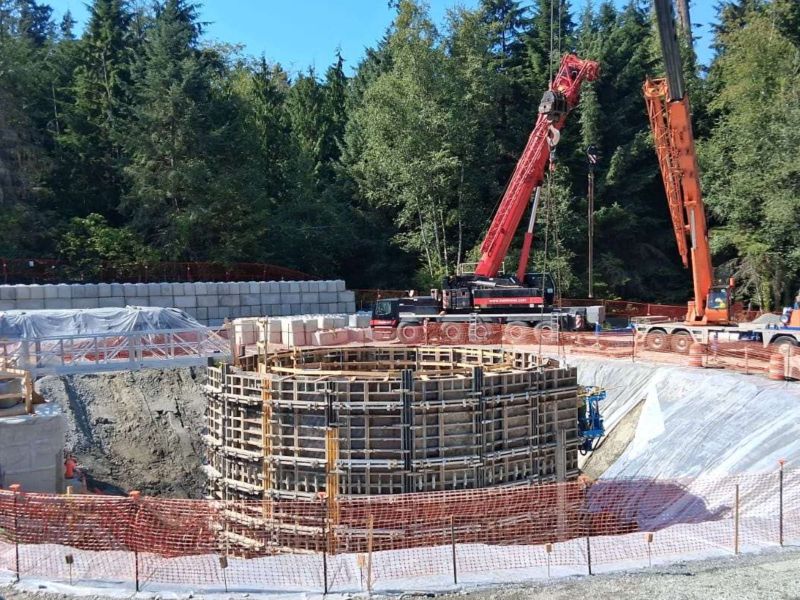
Featured image: Construction of the Stanley Park Water Supply Tunnel. (Metro Vancouver)