When we talk about the impacts of climate change, we are almost always talking about water. Whether it is the devastation of atmospheric rivers flooding communities, severe droughts parched agricultural land, or intense cloudbursts overwhelming aging urban stormwater systems, water utilities are on the front lines of a changing environment.
It is no longer enough to build infrastructure that handles yesterday’s baseline. Modern water projects must be engineered for the extremes of the next 50 to 100 years.
In Water Canada’s newly released report, a clear trend emerges: Canada’s most significant water investments are shifting from simple capacity upgrades to sophisticated climate adaptation initiatives. Here is a look at three key projects from the report leading the charge.
1. Mitigating the Flood: Fairbank Silverthorn Storm Trunk Sewer System (ON)
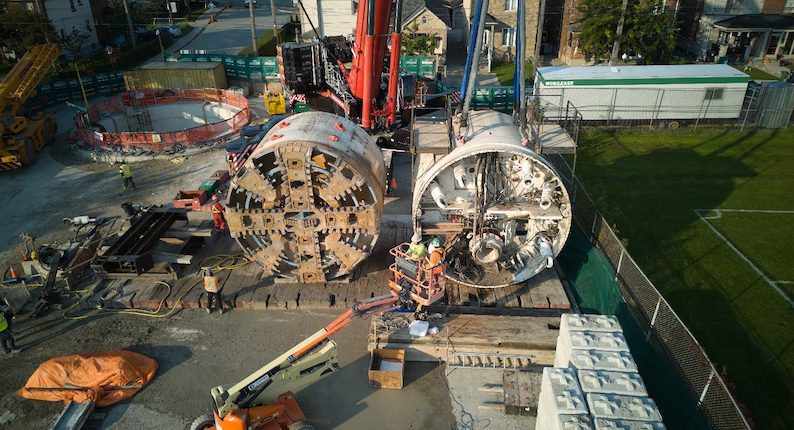
Tunnel boring machine after being extracted from the Bicknell Ave. and Nashville Ave. shaft.
Urban flooding from intense cloudbursts is one of the costliest climate threats facing modern municipalities. In Toronto, the $350-plus million Fairbank Silverthorn project is tackling this head-on as the city’s largest basement flooding initiative to date.
The project aims to insulate more than 4,600 homes and businesses across a 140-hectare area from severe wet-weather backups. The engineering behind it is a subterranean marvel: crews completed the main trunk line—a 4.5-meter diameter tunnel stretching 2.4 kilometers and buried up to 50 meters beneath the streets. Excavated by a custom-engineered Earth Pressure Balance Tunnel Boring Machine, the system won the Tunnelling Association of Canada’s 2025 Design Innovation of the Year Award for its cutting-edge design.
When fully commissioned alongside 15-plus kilometres of new local collector pipes, the system won’t just protect neighbourhoods; it will also serve as a massive temporary storage buffer, preventing 40 million litres of contaminated combined sewer overflows from spilling into Black Creek every year.
2. Defending the Source: Abbotsford Drinking Water Resilience Project (BC)
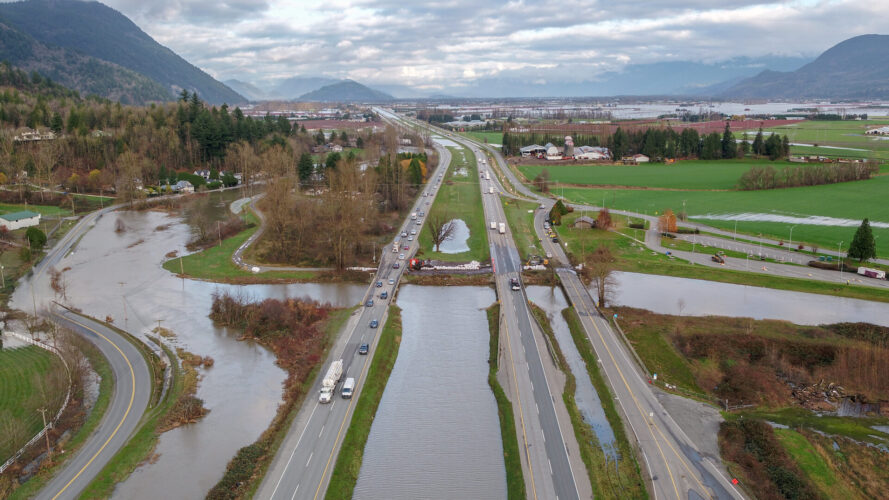
The Abbotsford Drinking Water Resilience Project moves the community to a secure, secondary regional water soure.
Few events highlighted Canada’s vulnerability to extreme weather quite like the catastrophic November 2021 floods in BC’s Fraser Valley, which knocked out a staggering 85 per cent of the local water supply system. The $84.4 million Abbotsford Drinking Water Resilience Project is a direct, aggressive response to that wake-up call.
Jointly funded by a $62 million provincial investment and the Abbotsford Mission Water Sewer Commission, the project moves the community toward a secure, secondary regional water source. The scope includes the installation of roughly 12 new vertical wells drilled into the Matsqui Prairie, alongside a brand-new water treatment plant and a dedicated pump station to tie the system directly into the existing regional grid. Serving more than 165,000 residents across Abbotsford, Mission, and the Matsqui First Nation, this infrastructure ensures that vital public health services, residential homes, senior care facilities, and local agricultural businesses retain safe drinking water even during future severe climate disasters.
3. Combating drought: Lake Diefenbaker Irrigation Projects (SK)
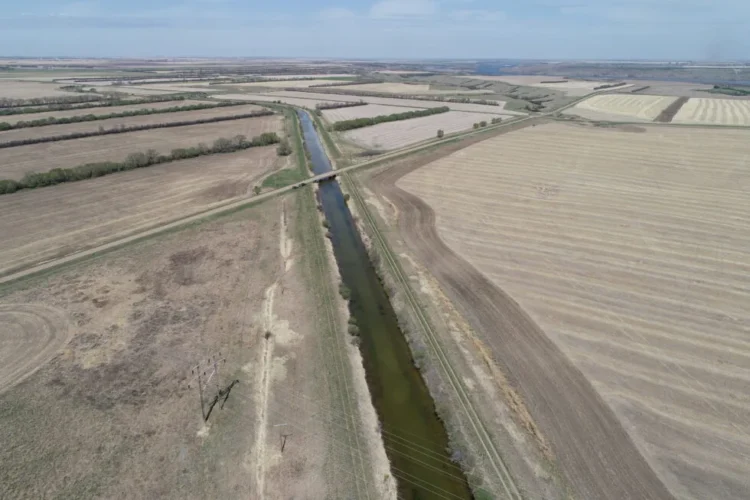
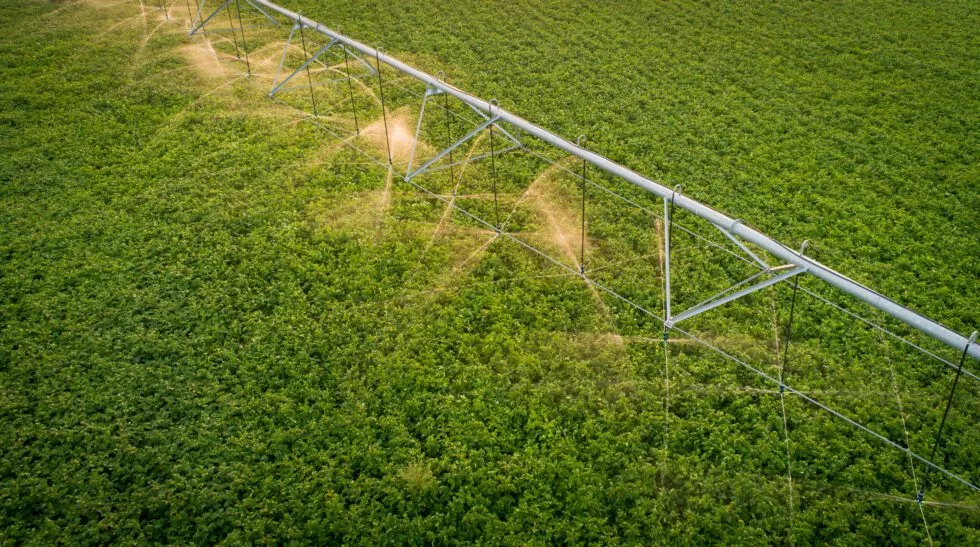
Westside Irrigation Rehabilitation Project (WIRP) near Lake Diefenbaker.
While the coasts battle too much water, the Prairies are building a defence against having too little. The massive, generational $4 billion Lake Diefenbaker Irrigation Projects represent a monumental effort to double Saskatchewan’s irrigable land, ultimately bringing water to 500,000 acres over a multi-phase, 10-year timeline.
The initial phase—the $1 billion Westside Irrigation Rehabilitation Project (WIRP)—is currently moving swiftly through its design steps. Spearheaded by Prairie Engineering Partners (a joint venture of Stantec and MPE Engineering), recent geotechnical work has optimized the system to expand from 90,000 to 100,000 acres of rehabilitated land, scaling up the capacity of the main canal to a massive 32 cubic meters per second. A finalized KPMG economic analysis indicates that this phase alone will inject $12.9 billion into the GDP and create 80,000 jobs by supercharging food manufacturing, livestock, and crop diversity. It is a critical long-term shield for Canada’s food security against prolonged, climate-driven droughts.
Moving from reactive to proactive
What these projects share is a philosophy of proactive engineering. Instead of rebuilding after a disaster strikes, these communities are leveraging multi-million and multi-billion-dollar investments to ensure that when the next extreme weather event hits, the taps keep running, the streets stay dry, and the ecosystem remains protected.
Want to see how other municipalities across Canada are anchoring climate resilience into their master plans? Check out the full breakdown, regional data, and complete list of the top developments in the 2026 Top 50 Water Projects Report here.