It is the resolution the Canadian water sector has been waiting for—and one it will be dissecting for years to come.
Just last week, Metro Vancouver and its original contractor, Acciona Wastewater Solutions, quietly put an end to their bitter, multi-million-dollar legal warfare. Through a mediated out-of-court agreement, the Spanish infrastructure giant agreed to pay the regional district $235 million to fully drop all cross-lawsuits, allowing both parties to finally turn the page.
On paper, a nine-figure settlement closes a tumultuous chapter. But in the grand, dizzying scope of the North Shore Wastewater Treatment Plant (NSWWTP) timeline, this resolution is less about assigning blame and far more about understanding the extreme volatility of modern mega-projects.
For municipal water managers, engineers, and infrastructure watchers across Canada, the saga of the North Shore plant isn’t just local news; it is a textbook case study on procurement risk, the limits of fixed-price contracts, and what happens when a critical project gets caught in a perfect storm of global disruptions.
How did we get here? A timeline of shifting tides
To understand the nuance of this settlement, you have to look at how a routine environmental upgrade transformed into one of the most complex public works challenges in British Columbia’s history.
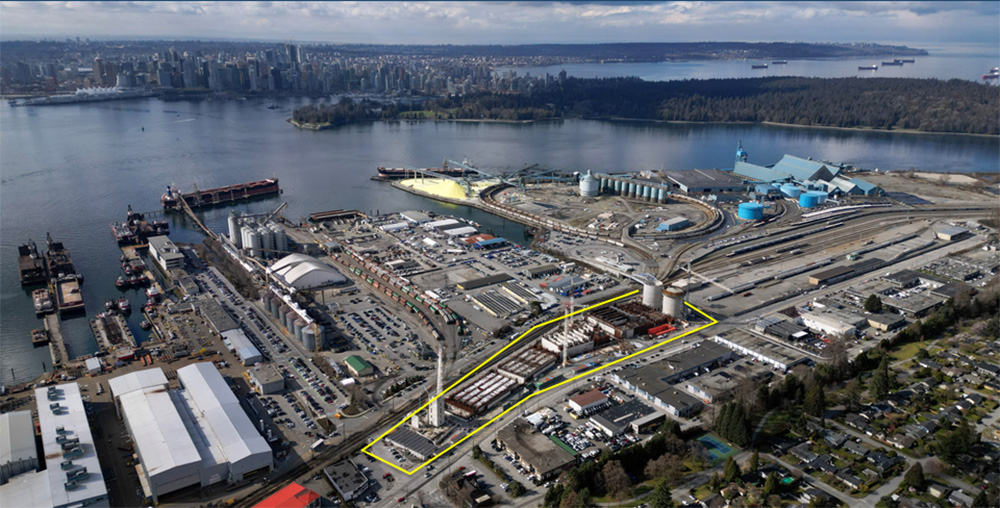
The goal was vital: replace the aging, primary-treatment Lions Gate plant with a state-of-the-art, tertiary-filtration facility to safely serve over 300,000 residents and meet stringent federal environmental regulations.
However, executing that plan meant navigating a timeline disrupted by unprecedented global events:
- 2013: Metro Vancouver zeroes in on an initial project estimate of $700 million, with a targeted completion date of 2020.
- 2018: Construction officially begins under a design-build-finance contract with Acciona.
- 2020–2021: The COVID-19 pandemic hits, triggering severe global supply chain bottlenecks, extreme material inflation, and acute skilled labor shortages across the Pacific Northwest. The project budget is recalibrated to $1.058 billion.
- January 2022: Under immense pressure from delays, the relationship fractures. Metro Vancouver terminates the contract, citing schedule delays. Acciona fires back with a $250-million lawsuit for wrongful termination, counter-arguing that the site was plagued by unforeseen, undisclosed underground deficiencies and that the regional district continuously altered design requests mid-stream.
- Late 2022: Metro Vancouver brings in PCL Construction to manage the site and AECOM to oversee design and engineering, initiating a comprehensive audit of the existing infrastructure.
- March 2024: After a deep-dive review of the design changes and structural adjustments required to meet updated regional standards, Metro Vancouver reveals the true cost to cross the finish line: a staggering $3.86 billion, with a new operational target of 2030.
- May 2026: Mediation concludes successfully. The lawsuits are killed, the $235-million settlement is finalized, and both sides avoid a lengthy, unpredictable trial that was scheduled to drag well into 2027.
The industry unknowns: What’s next?
Now that the legal battle is out of the way, the industry’s focus shifts back to transparency, risk-sharing, and long-term financial delivery.
Where does the settlement money go?
A fierce regional debate has already broken out over how to allocate the $235 million. Under the current cost-sharing model, North Shore households are slated to absorb a heavy portion of the project’s financial adjustments—translating to an extra $590 to $1,182 on their annual utility bills for the next 30 years. Local municipal leaders are aggressively pushing for the settlement funds to be applied directly to ratepayer relief rather than simply being absorbed into the remaining construction budget.
The procurement post-mortem restarts
While the lawsuits were active, Metro Vancouver paused an independent, external review into the project’s governance to protect its legal position. With the litigation officially resolved, that review is back on. Industry insiders are watching closely; the final report promises to offer invaluable insights into how public entities and private contractors can better cooperate on high-stakes environmental infrastructure.
The decommissioning wildcard
Here is the kicker that utility directors are keeping an eye on: the current $3.86-billion price tag still doesn’t include the final bill for decommissioning and remediating the old Lions Gate plant, which sits on land adjoining Squamish Nation territory. Currently, only $20 million is earmarked for that phase—a figure local officials openly admit could shift as environmental assessments wrap up.
The takeaway for the water sector
As PCL crews continue executing complex, extended concrete pours on the future solids-handling buildings in Vancouver, the North Shore project stands as a stark monument for the Canadian water industry.
It underscores the immense financial risk of utilizing rigid, fixed-price contracts for mega-projects in an era of hyper-inflation and unpredictable global markets. Ultimately, the North Shore settlement proves that in modern infrastructure, navigating the shifting tides of contract risk and procurement collaboration is just as critical as the engineering itself.
AI tools were utilized to assist with timeline aggregation and historical research for this piece. All data points, figures, and timelines have been independently verified by the author.