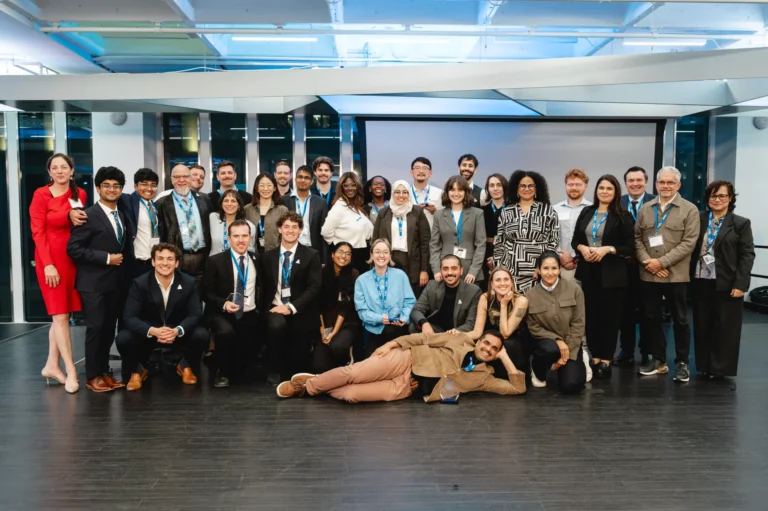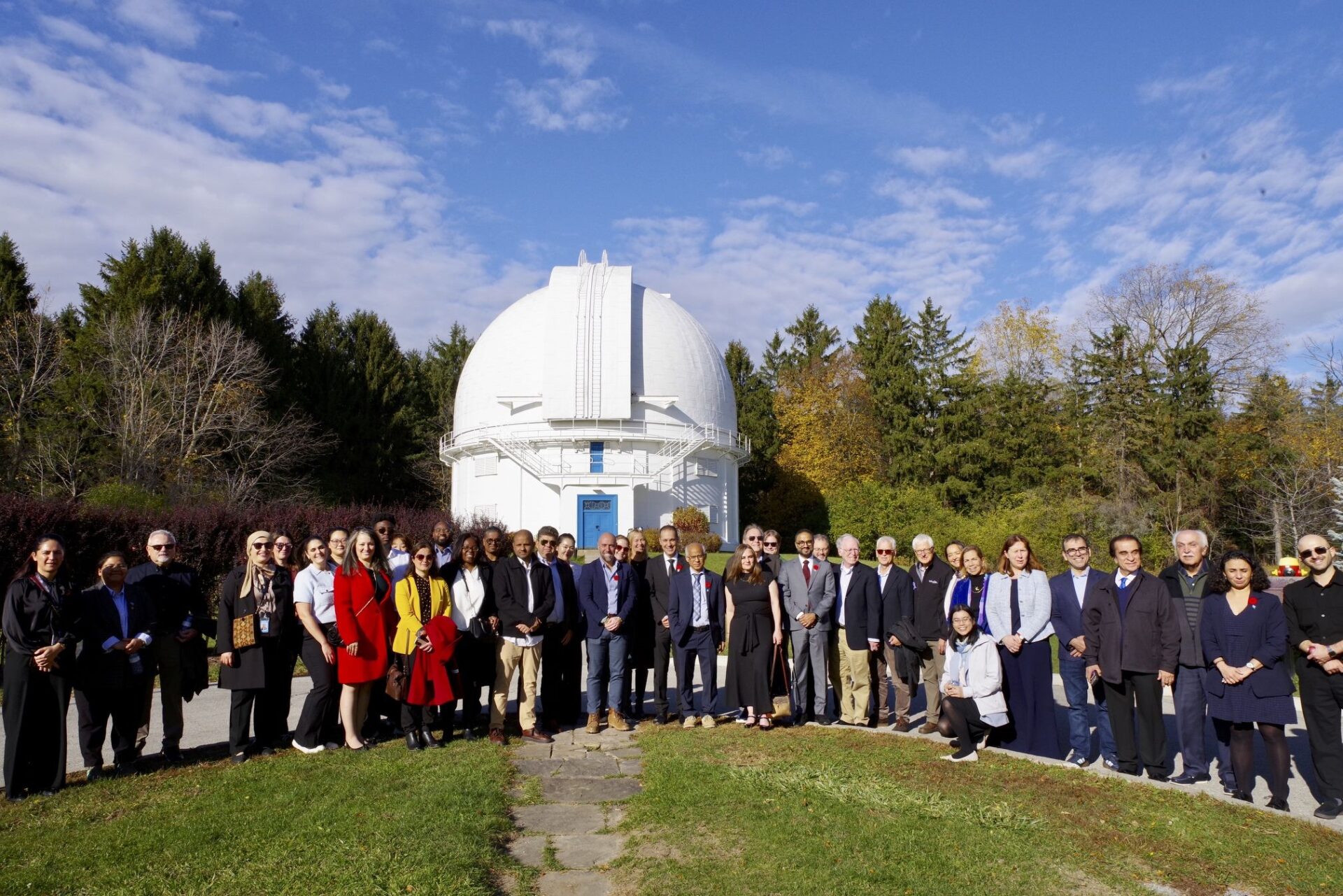
The United Nations University Institute for Water, Environment and Health (UNU-INWEH) hosted the 2nd Conference of UNU Hubs at its headquarters in Richmond Hill, Ont. The two-day meeting brought together Hub Directors, Co-Directors, managers, researchers and affiliates from five UNU Hubs, together with UNU-INWEH staff and members of the Institute’s International Advisory Committee, to take stock of progress since the program’s launch in 2024 and the inaugural meeting at the Hamburg University of Technology in June 2025 and to explore how the Hubs can achieve more together.
The conference was held alongside celebrations marking 30 years of UNU-INWEH in Canada. Following a Directors’ breakfast hosted by the Mayor of Richmond Hill and a UNU-INWEH 30th Anniversary Celebration, the Hubs convened for two days of working sessions. The celebrations then continued with the UNU-INWEH 30th Anniversary Banquet, hosted by the Urban Economy Forum at the World Urban Pavilion in Regent Park, Toronto, and with further anniversary-related events in Ottawa, the nation’s capital.
“The UNU Hubs show what becomes possible when universities and the United Nations work as one team. The network has grown from an idea into a working platform, and this meeting was about putting that platform to work for the communities and decision makers who need science they can use,” said Prof. Kaveh Madani, Director of UNU-INWEH.
UNU Hubs are partnerships between UNU-INWEH and leading universities that combine research, education and policy engagement on critical themes related to water, environment and health. Under the banner “From Pilot to Platform”, each Hub:
- UNU Hub on Empowering Communities to Adapt to Environmental Change at the University of Calgary, Canada;
- UNU Hub on Engineering to Face Climate Change at the Hamburg University of Technology, Germany;
- UNU Hub on Remote-Sensing and Sustainable Innovations for Resilient Urban Systems (R-SIRUS) at the City College of New York, United States;
- UNU Hub on Water in a Changing Environment (WICE) at Lund University, Sweden; and
- UNU Hub on Resilient Environment, Agriculture, Climate and Health for Africa (REACH-AFRICA) at the University of Pretoria, South Africa
presented its progress over the past year, including achievements, partnerships with UN agencies and governments, new initiatives, lessons learned and opportunities for collaboration.
Working sessions were organized around the three pillars of the Hubs model. In the policy, impact and advocacy session, Hubs shared how their science is informing decisions. In the transboundary Yukon River basin, “decision calendars” were co-developed with river forecast centres to guide future investments in hydrologic forecasting; in New York, urban flood forecasting tools were built with city officials. Other examples included support for Ukraine’s water infrastructure and alignment with EU water directives, societal impact stories published with the City of Hamburg, and a science–policy dialogue in Zimbabwe on climate-resilient agrifood systems. Across these and other examples, participants agreed that lasting policy impact depends on trusted, long-term relationships, involvement of affected communities, and on evidence that responds to what decision makers need, in formats they can use.
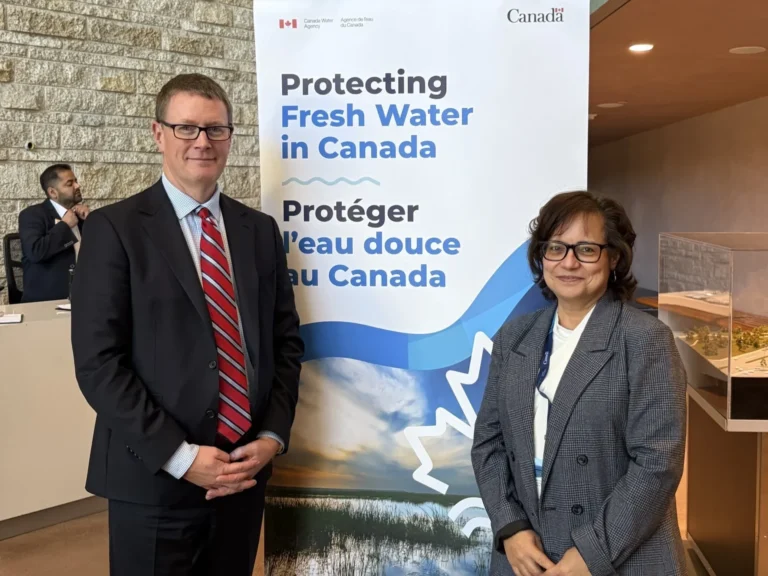
As part of the celebrations, UNU-INWEH also signed three Memorandums of Understanding (MOUs) with the Canada Water Agency (CWA) , the International Development Research Centre (IDRC), and the International Institute for Sustainable Development (IISD).
The agreement with CWA provides a framework for research, knowledge exchange, training and capacity development on water security in Canada. Through this collaboration, the two organizations aim to support science-informed decision-making and address shared water challenges.
The agreement with IDRC establishes a framework for collaboration in four key areas: climate-resilient food systems, global health, gender equality and inclusion. Through joint research, knowledge exchange and capacity development, the partnership aims to support evidence-based solutions to shared global challenges.
The agreement with IISD provides a framework for collaboration in key areas, including water security, climate resilience, freshwater governance, food security and nature-based solutions. Through joint research, capacity development and knowledge exchange, the partnership aims to connect scientific knowledge with policymaking and practical action.
Featured image: (UN-INWEH)