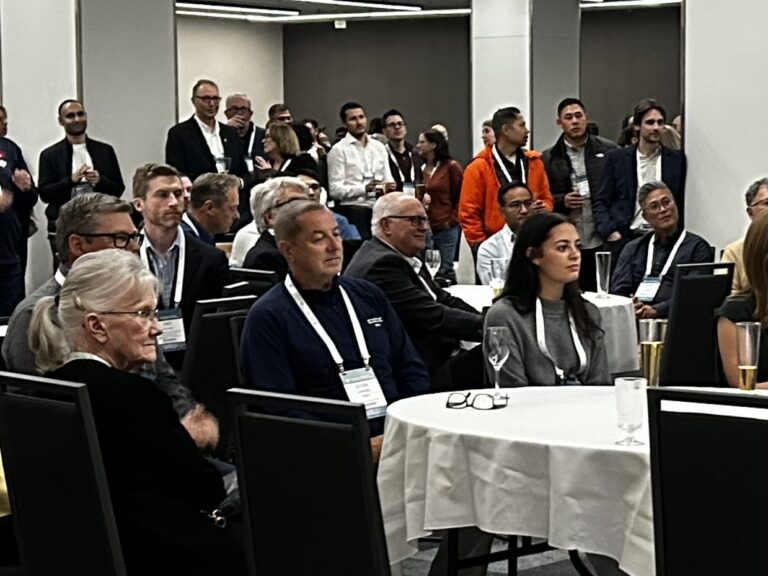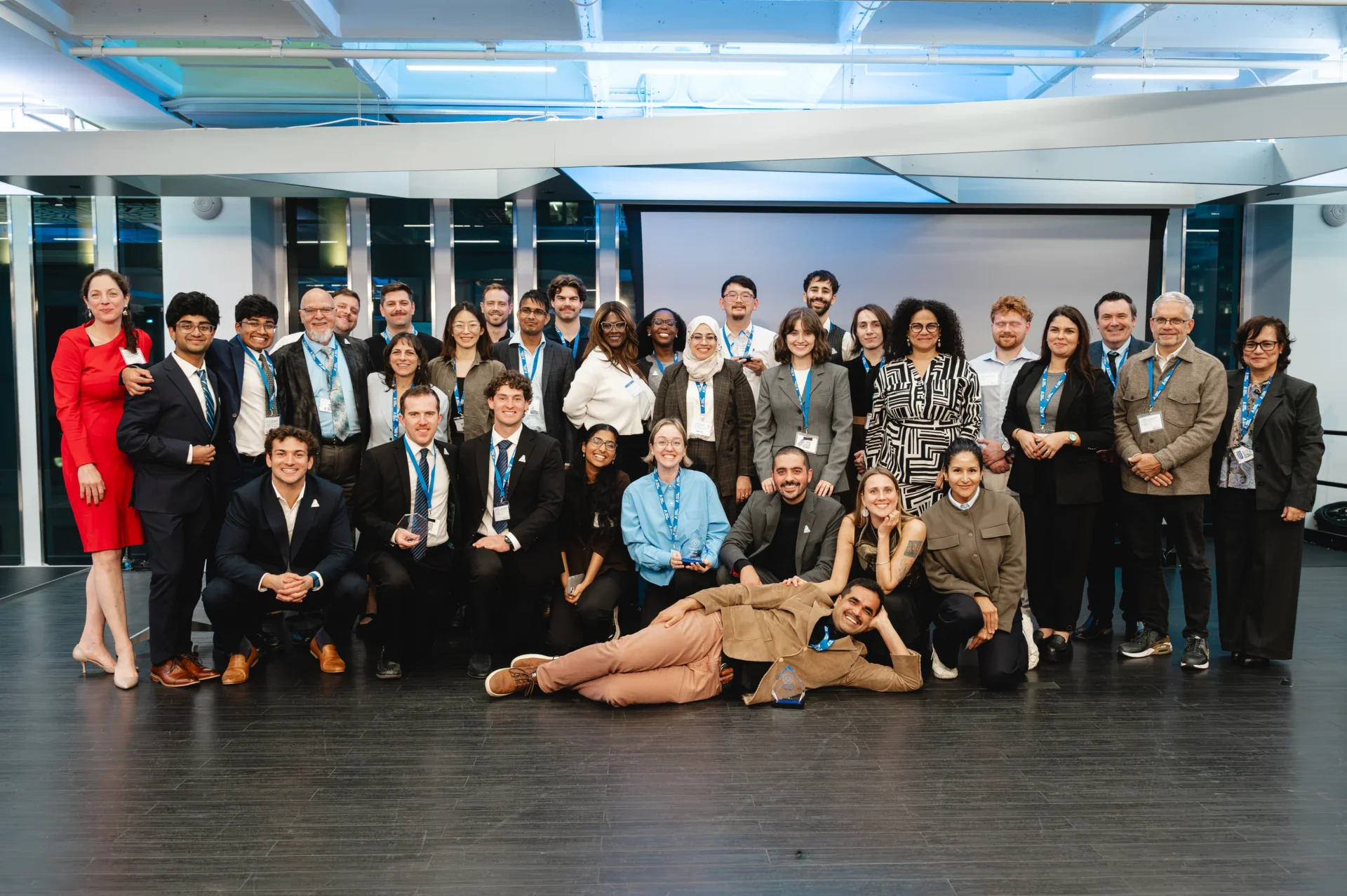
Twelve teams of innovators competed for seed funding at the Finale of the Great Lakes and St. Lawrence Binational AquaHacking Challenge 2026 in Detroit yesterday, presenting solutions to the most important water issues currently facing the region, including invasive species, data centre water use, fishery sustainability, pollution, microplastics and harmful algal blooms.
BlueLoop BioWorks, Limnetic Optical Solutions and EchiDNA Environmental emerged as the top three teams, winning a total of $50,000 in seed funding in the evening awards presentation.
The Shark Tank–style pitch session marked the culmination of a seven-month journey for more than 300 competitors from both Canada and the United States, during which they received expert mentorship to develop innovative solutions that protect water while building the Blue Economy.
Co-hosted by AquaAction, the Great Lakes and St. Lawrence Cities Initiative (GLSLCI), and the Great Lakes St. Lawrence Governors & Premiers (GSGP), the full-day finale event opened with keynote speaker Carlos Del Toro, former U.S. Secretary of the Navy, followed by a panel on the future of the region’s blue economy, before diving into the pitch competition.
“Everyone comes away a winner today. As our biggest-ever AquaHacking Challenge, the 2026 competition brought together innovators from both sides of the border to help solve the pressures on our freshwater systems, which are reaching a crisis level. Today was a showcase for the value of investing in the next generation. The blue economy starts right here, with them.” said Soula Chronopoulos, president, AquaAction.
The 12 finalist teams presented their solutions to a panel of expert judges, including Farah Ben Salah (E2METRIX), Kerry C. Duggan (ESP.earth), Robert Michael McKay (Great Lakes Institute for Environmental Research), Chris Moberg (Central Michigan University) and Kevin Mull (Bedrock Detroit), who ultimately declared this year’s winners.
Now in its 11th year, the Challenge aims to empower students and professionals working on innovative solutions to crucial water issues, giving them the momentum and support they need to develop their early-stage ventures into pilots and contract-ready startups, all while equipping talent with the key skills needed by this growing sector.
“The Great Lakes and St. Lawrence Cities Initiative shares a common mission with AquaAction: to develop the region into a vibrant and sustainable blue economy. Through this fantastic event, we can see the best and brightest young minds that our region has to offer. We are going to need exactly this kind of out-of-the-box thinking to tackle the urgent freshwater challenges facing our cities, both now, and going forward, as we build the Fresh Coast Economic Corridor,” said Jon Altenberg, president and CEO, Great Lakes and St. Lawrence Cities Initiative.
UTX was Platinum Partner who also sponsored the second- and third-place prizes. Diamond Partners: Friends of the Rouge (FOTR) and Port Detroit (the Detroit/Wayne County Port Authority); Gold Partner: Newlab; our Silver Partners, Aurora Patents, Coburn Family Trust, Delta Dental, the International Association for Great Lakes Research (IAGLR), KPMG, National Research Council Canada (NRC), and Xylem; Bronze Partners: Aqueus, Central Michigan University, Great Lakes Water Authority (GLWA), the Peterborough K. M. Hunter Charitable Foundation, and St. Lawrence Seaway Management Corporation (SLSMC); and Water Allies: BASF, Ford Insurance Agency, Michigan Department of Environment, Great Lakes, and Energy (EGLE), and MSU Federal Credit Union (MSUFCU). AquaAction is established by de Gaspé Beaubien Foundation, accelerated by Ovivo, and powered by RBC.
The Winners
First Place ($25K)
Co-sponsored by Urban Tech Xchange (UTX) and Warner Norcross + Judd LLP
BlueLoop Bioworks
Abhishek Udawat (Massachusetts Institute of Technology)
BlueLoop BioWorks converts fish-processing byproducts from the Great Lakes, including skins, scales, frames, and viscera, into high-value biomaterials and bioactive ingredients through modular, enzyme-based bioprocessing. Rather than treating these byproducts as waste, the system produces collagen and gelatin hydrogel inputs, peptide fertilizers, and omega-rich oil fractions for local markets, supporting cleaner fisheries and a circular regional bioeconomy.
Second Place ($15K)
Sponsored by Urban Tech Xchange (UTX)
Limnetic Optical Solutions
Jessica Reemeyer, Aaliyah Lahai and Ashleigh Addison (University of Regina)
Limnetic Optical Solutions has built an AI-powered underwater camera that makes freshwater monitoring simple, affordable, and non-invasive. The camera automatically detects fish and records only when wildlife is present, helping researchers and communities collect meaningful data while using less storage and power.
Third Place ($10K)
Sponsored by Urban Tech Xchange (UTX)
EchiDNA Environmental
Haolun (Allen) Tian and Luke Schmidt (Queen’s University)
EchiDNA Environmental has created a high-volume, pumpless, reusable, room-temperature-stable eDNA filter that makes environmental DNA (eDNA) biomonitoring accessible beyond academic settings, enabling anyone to collect samples at low start-up cost.
People’s Choice Award ($2.5K)
Sponsored by Atterx Biotherapeutics
Enactus Windsor (100% Fish)
Andrew Booth, Kent Walter and Trevor Kloppenburg (University of Windsor)
100% Fish transforms fish-processing waste, supplied by partner John O’s Foods, into value-added products such as Erie Eco-Bites and a collagen cream. The team’s mission is to reduce landfill waste by scaling eco-friendly manufacturing as an alternative to everyday products.
Featured image: (AquaAction)