OTTAWA — The federal government has introduced new legislation aimed at closing the regulatory gap for drinking water on First Nations lands, backed by a historic $4.6-billion funding commitment.
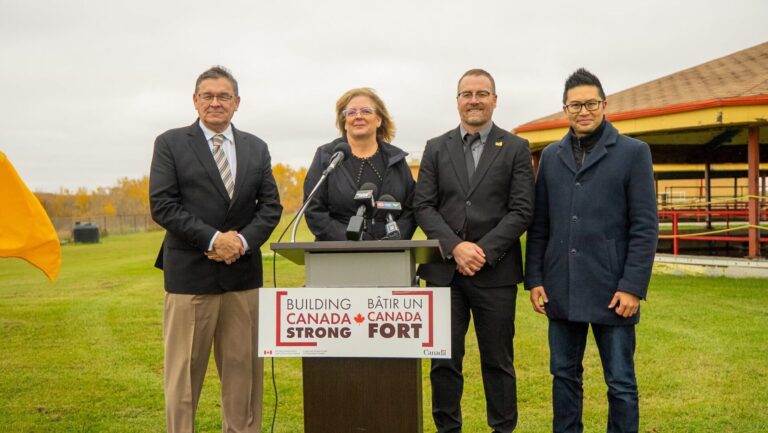
Mandy Gull-Masty, Minister of Indigenous Services, introduced Bill C-37, the proposed First Nations Clean Water Act, in the House of Commons on Tuesday. The bill represents a renewed legislative push following more than six years of consultation, engagement, and parliamentary study of its predecessor, Bill C-61.
For water utility operators, municipal leaders, and engineering consultants across Canada, the proposed act outlines a significant overhaul of how water infrastructure, water quality compliance, and jurisdictional cooperation will operate on First Nations reserves.
Establishing a regulatory baseline
Unlike off-reserve municipalities, First Nations communities have historically lacked a legally enforceable national framework for safe drinking water. Bill C-37 addresses this regulatory gap by establishing a clear baseline for water and wastewater quality standards.
Under the proposed legislation:
-
Drinking Water: Systems will be required to at least meet the standards set out in the Guidelines for Canadian Drinking Water Quality or applicable provincial and territorial standards.
-
Wastewater: Effluent discharge must at least comply with the federal Wastewater Systems Effluent Regulations or comparable provincial/territorial rules.
The act explicitly recognizes that the inherent right of First Nations to self-government includes jurisdiction over water on, in, and under their lands. Through the co-development of subsequent regulations, First Nations governing bodies will have the authority to administer and enforce their own water laws, which can exceed federal or provincial baselines if a community chooses.
Long-term funding and governance changes
Recognizing that new regulatory compliance standards require sustained capital, the federal government announced a $4.6-billion targeted funding commitment for water and wastewater infrastructure.
This capital injects vital resources into a sector that water managers know requires continuous operational support. Rather than relying entirely on ad-hoc or one-time project grants, Bill C-37 mandates that Ottawa work alongside First Nations to co-develop a long-term funding framework. This framework is intended to cover the full lifecycle of water assets—including construction, daily operations, preventative maintenance, and future system upgrades.
The $4.6-billion commitment builds on more than $9.4 billion allocated toward Indigenous water infrastructure since 2015. According to departmental data, prior investments have supported water systems serving approximately 483,000 people across 595 communities, including upgrades to 10,000 homes and 700 public buildings.
The new funding is positioned as a critical tool to lift remaining long-term drinking water advisories (DWDAs) and ensure communities can realistically meet the new statutory mandates.
Implications for source water protection and utilities
For neighboring municipal utilities and provincial regulators, the legislation creates formalized pathways for regional collaboration. Because watersheds cross political boundaries, Bill C-37 introduces mechanisms to protect source water adjacent to First Nations lands, requiring inter-jurisdictional cooperation between First Nations, the federal government, and provinces or territories.
Additionally, the bill mandates the creation of a new First Nations-led water commission. This institution will strengthen indigenous governance, provide oversight, and establish clear federal accountability structures for delivery failures.
“For too long, many First Nations communities have gone without the protections that help keep drinking water safe,” Gull-Masty said in a statement. “The proposed First Nations Clean Water Act would establish, for the first time, a legislative framework to support safe drinking water in First Nations communities, while recognizing First Nations jurisdiction over water on their lands and holding governments to account.”
The bill must now pass through successive readings in the House of Commons and the Senate before becoming law. For Canada’s water industry professionals, the coming months will provide critical clarity on the technical timelines, procurement strategies, and engineering demands required to bring these systems inline with the proposed legal frameworks.