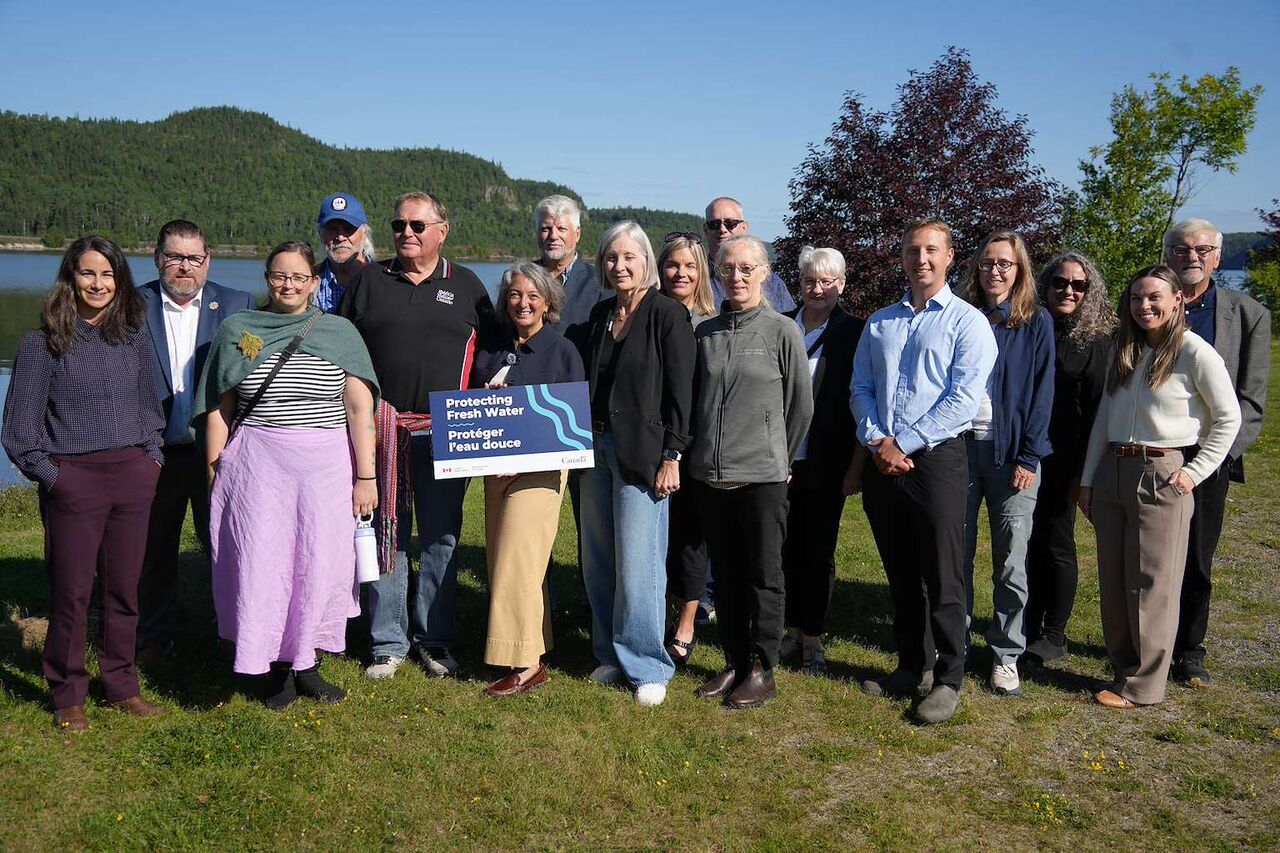
After nearly four decades of restoration efforts, the federal government announced that Nipigon Bay is no longer designated as a Great Lakes Area of Concern.
Nipigon Bay was designated as an Area of Concern in 1987. Pollution from industrial and municipal wastewater, development in Lake Nipigon and the Nipigon River, and debris from past logging activities contributed to degraded water quality and ecosystem health.
“Today is a great day for Nipigon Bay, the Great Lakes, and freshwater in Canada. The delisting of Nipigon Bay as an Area of Concern reflects decades of dedicated work by our government and partners to restore water quality, habitats, and ecosystem health. By working together, we have transformed a once-degraded area into a healthier ecosystem that will benefit local communities, Indigenous people and future generations. It shows that environmental restoration is possible when governments and communities work toward common goals,” said Julie Dabrusin, Minister of Environment, Climate Change and Nature and Minister responsible for the Canada Water Agency.
The delisting confirms that all beneficial uses which were previously impaired have since been restored. This has led to:
- improved water quality
- recovery of fish populations
- enhanced fish habitats
- healthier populations of sediment-dwelling organisms (benthos)
- better overall aesthetics
This milestone was made possible through the joint efforts of the governments of Canada and Ontario under the Canada-Ontario Agreement on Great Lakes Water Quality and Ecosystem Health. Restorations efforts included improvements to nearby wastewater treatment, industry compliance with federal and provincial regulations, enhancements to aquatic habitats through the rehabilitation and re-naturalization of nearby river flows and creeks, restoration of former wetland and spawning grounds, and the creation of new habitat. This reflects the success of sustained collaboration with Indigenous partners and local communities to restore the bay’s aquatic ecosystem and protect the Great Lakes for future generations.
“Returning Nipigon Bay in Northern Ontario to a vibrant, healthy ecosystem is a major conservation victory made possible through the dedicated efforts of our two governments, along with the many Great Lakes partners and local residents who supported this work. By working together to restore the health of the Great Lakes – we are delivering on our promise to protect Ontario and support the resilience of our communities and local economies for generations to come,” said Todd McCarthy, Ontario Minister of the Environment, Conservation and Parks.
Through the Canada Water Agency, the Government of Canada is strengthening coordination and collaboration with provinces, territories, and Indigenous peoples to address freshwater challenges and opportunities in the Great Lakes and across the country. These efforts are part of a broader commitment to building a cleaner, more secure, and prosperous future for Canadians.
“Since time immemorial, the lands and waters of Nipigon Bay have sustained my people and remain an important part of who we are. After nearly four decades of work to restore the bay and address the impacts of industry, we are seeing the results through cleaner water, restored habitat, and stronger, healthier fish communities. Today is an important milestone, but our responsibility to these lands and waters does not end with the removal of this designation. Red Rock Indian Band will continue to protect and care for Nipigon Bay, ensuring these lands and waters remain clean, healthy, and capable of sustaining our people for generations to come,” said Chief Allan Odawa, Red Rock Indian Band.
Areas of Concern are locations within the Great Lakes where water quality and ecosystem health have been severely degraded by human activity. Effects include beach closures, habitat loss, and impacts on fish and wildlife populations.
Since 1987, three Areas of Concern have been delisted: Collingwood Harbour (1994), Severn Sound (2003), and Wheatley Harbour (2010).
Two others (Spanish Harbour and Jackfish Bay) have been designated as Areas of Concern in Recovery.
Featured image: (Government of Canada)