The Government of Alberta announced Bill 42, which is proposing new restrictions on data centres to protect communities, farmland, water and electricity while ensuring responsible growth.
If passed, Bill 42, the Energy, Environment and Utilities Statutes Amendment Act, 2026, will establish minimum distances between data centres and homes, known as setbacks, and introduce stricter standards for data centre development, including for water use and farmland protection. The provnce said the changes respond directly to feedback from Albertans and build on existing rules to ensure that any new data centre project that moves forward does so with strong protections in place for communities and the environment while supporting responsible growth.
Proposed changes would also advance the mature asset strategy, reduce regulatory duplication, and strengthen environmental enforcement and penalties for illegal dumping, as well as targeted utility affordability initiatives.
“Albertans told us what matters most: their communities, farmland and water. We listened. These proposed rules would make sure AI data centres grow in Alberta on Alberta’s terms, with clear protections for communities and the certainty investors need to build here,” said Nate Glubish, Minister of Technology and Innovation.
If passed, amendments and supporting regulations would restrict data centres 10 megawatts or larger from being built within 600 metres of the nearest home or on Alberta’s highest-quality farmland, protecting about 14 million acres of Class 1 and 2 agricultural land, as well as Class 3 land in municipalities without Class 1 or 2 land. Large data centres would also be prohibited on irrigated land. In certain circumstances, alternative setbacks could be set by municipalities where local planning supports compatible development. Existing noise requirements would continue to apply.
Changes would also support the development of a provincewide water use standard to bring data centres’ cooling water use close to zero while requiring that data centres be designed and operated so excess heat can be recovered and made available for greenhouses, industry or homes. To address pollution concerns, amendments would increase maximum fines for corporations, including data centre operators, to $6 million for serious environmental contamination, in addition to existing cleanup and remediation obligations.
“As chair of the Alberta Rural Industrial Caucus, where many of us are navigating data centre developments, we welcome the province’s commitment to providing greater clarity around protecting agricultural land, minimizing water use, and other initiatives. We look forward to reviewing Bill 42 and engaging with the province on regulations to support a balanced approach to development while keeping our communities safe and sustainable places to live,” said Amanda McDonald, chair of ARIC, reeve Division 1, County of Grande Prairie Council.
Bill 42 would create a new Data Centre Designation to further protect electricity affordability and reliability by ensuring that data centre proponents are responsible to pay for their own power infrastructure project costs and cannot pass them on to Alberta ratepayers. This builds off existing protections that require data centres to demonstrate that they will not put grid reliability at risk and will reduce their electricity use first during an emergency before Albertans or essential services are asked to do so.
As part of ongoing work to address affordability on every aspect of Albertans’ utility bills, changes also include new tools to address disproportionately high distribution costs faced by some Alberta residents. Proposed amendments would also rename the Balancing Pool to the Alberta Utilities Trust. The change would reflect the agency’s role in supporting utility affordability.
“Sturgeon County is encouraged by the progress on regulatory frameworks for data centre development that protect agricultural land and water. The county also welcomes the additional policies addressing increased setbacks, noise and light pollution, and electricity distribution costs. Sturgeon County will continue to advocate for action on cumulative effects on transportation infrastructure, emissions, stakeholder engagement, responsible use of artificial intelligence, digital privacy and digital sovereignty.”
Alanna Hnatiw, mayor, Sturgeon County
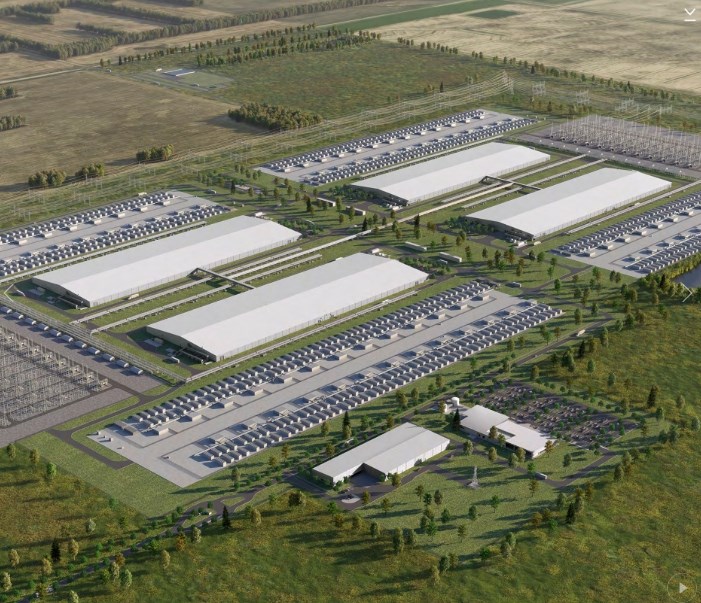
Featured image: (Meta)