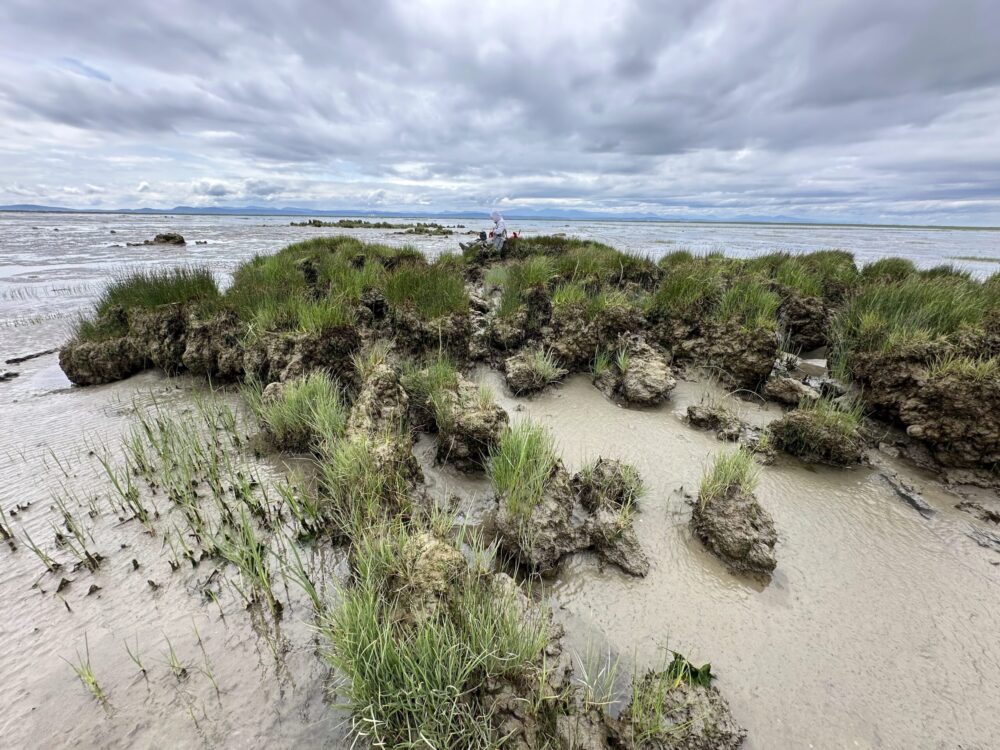
Ducks Unlimited and the University of British Columbia recently launched an initiative to use sediment to rebuild eroding wetlands and enhance flood protection.
The Sustainable Ecosystem Enhancement with Dredged Sediments (SEEDS) initiative, co-led by wetland conservation organization Ducks Unlimited Canada and UBC’s Coastal Adaptation Lab, brings together scientists, engineers, Indigenous communities, regulators and industry partners to explore how dredged sediment could be reused to restore coastal ecosystems and support climate resilience across the region, a Ducks Unlimited release said.
“Marshes in the Fraser Delta evolved with sediment carried by the river. When that sediment is removed from the system, those ecosystems are unable to keep up with sea-level rise. SEEDS is about exploring how we can put that material back to work — rebuilding wetlands instead of sending a valuable resource out to sea,” Ducks Unlimited Canada senior restoration biologist Eric Balke said.
Millions of cubic meters of sediment are dredged from the Fraser River each year to keep navigation channels and harbours open. Over half of that material is transported offshore and disposed of, the release said.
The SEEDS launch follows a four-year pilot project at Sturgeon Bank, a wildlife refuge in Richmond, B.C. where reclaimed sediment was placed to demonstrate the possibility of enhancing tidal marsh habitat with the material.
“There’s a real opportunity here for the region to move from one-off pilots to a coordinated approach to coastal resilience. Instead of a linear pathway—dredging, then disposal at sea—SEEDS brings together science, design and local knowledge to explore opportunities for a circular resource economy,” UBC School of Architecture and Landscape Architecture associate professor and Coastal Adaptation Lab director Kees Lokman said.
The initiative is supported in part by funding from the Marine Environmental Observation, Prediction and Response Network (MEOPAR), which supports the project’s community engagement and stakeholder workshop activities.
While the work focuses on the Lower Mainland it could be applied on a wider scale, the release said.
“Many deltas worldwide face rising seas, eroding wetlands and declining sediment supply. Reusing dredged sediment could offer a nature-based approach to restoring coastal ecosystems while strengthening climate resilience,” the release said.