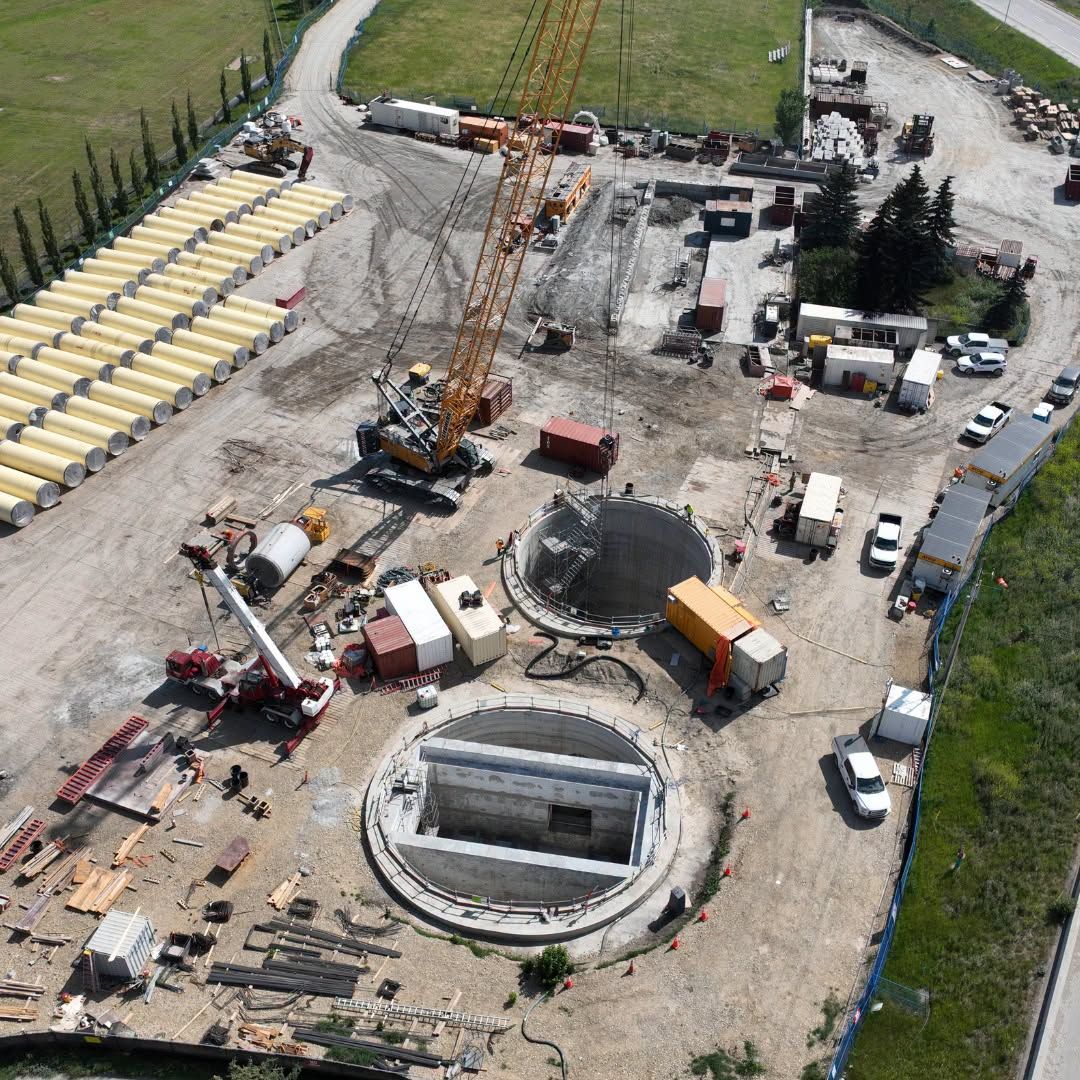
The City of Calgary announced that the Bearspaw South Feeder Main Replacement Project continues to advance on schedule, and Stage A microtunneling and installation of the concrete carrier pipe is now complete.
“The completion of Stage A microtunneling is a significant step forward for the project,” said Darren Finney, Manager, Major Projects. “This complex work involved tunneling beneath major infrastructure, minimizing impacts on the community. With the concrete carrier pipe now in place, we will continue installing the new steel feeder main, preparing for the critical system connection work planned for the Fall.”
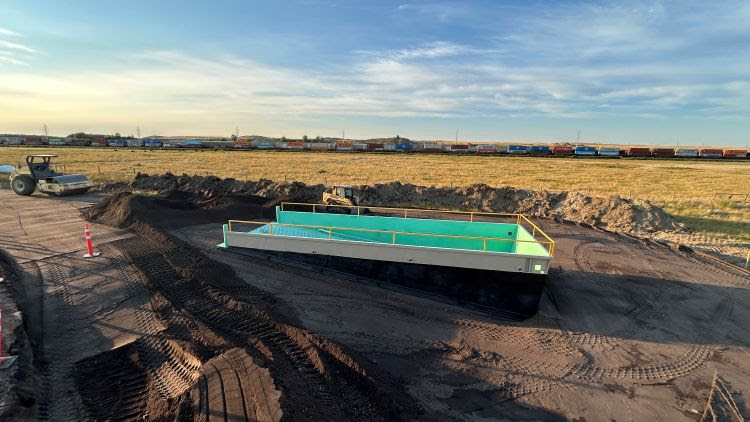
Construction on Stage A of the new Bearspaw South Feeder Main began in January using microtunnelling. This method allows the new feeder main to be installed beneath existing infrastructure with minimal surface disruption. First, a concrete carrier pipe is installed underground and then the new steel feeder main is placed inside it.
Stage A construction has now completed approximately 3.7 kilometres of microtunnelling and the full installation of the concrete carrier pipe between the Shaganappi Pump Station and 73 Street N.W. Installation of the new steel feeder main remains on schedule, with more than two kilometres of pipe now installed inside the carrier pipe.
Stage B construction update
Stage B open-cut construction along 34 Avenue N.W. in Bowness began in June and remains on schedule. More than 1 km of the new steel feeder main has now been installed, with 40% of Stage B feeder main installation now complete. Construction is currently active on three blocks, and four blocks where feeder main installation has been completed have reopened to traffic. Two additional blocks are expected to reopen next week.
Construction is being completed in sections, and roadways, sidewalks and property access are being restored as work advances.
Looking ahead
In mid-October the Bearspaw South Feeder Main will need to be shut down to connect the new feeder main to the existing water system. Work on improving Calgary’s drinking water system will begin in September with three phases.
Work at the Shaganappi pump station to connect it to the new feeder main is estimated to begin in September. In addition, unrelated work for the new North Calgary Water Servicing feeder main will mean the Bearspaw Water Treatment Plant will need to be temporarily shut down in mid-September. There may be a need for temporary outdoor water restrictions, but it will depend on the weather and water demand at that time. Teams are continuing to assess conditions and will make a final decision on restrictions closer to the start of work.
Pipe tie-in connections are estimated to begin in mid-October at various locations along the new feeder main pipe and include open-cut construction similar to ongoing Stage B construction. Stage 4 outdoor water restrictions and indoor water conservation will be required during this time.
Feeder main commissioning is estimated to begin in mid-November. This will include disinfecting the pipe, filling it with water and taking the existing feeder main out of service. No restrictions are anticipated during this time.
Parkdale Boulevard Repairs
While the feeder main is shut down, The City will complete six additional repairs on the feeder main between the Shaganappi Pump Station and the Memorial Pump Station along Parkdale Boulevard and Memorial Drive N.W.
Recent condition assessments identified six locations on the 1500 mm section of the Bearspaw South Feeder main that require proactive repairs. While the 1500 mm and the 1950 mm pipe, which is currently being replaced, are both part of the same feeder main, they are separate sections with different condition profiles. Assessments of the 1500 mm section show it remains in good overall condition and does not require replacement. Instead, targeted repairs at specific locations will help maintain the pipe’s long-term reliability. Completing this work while the feeder main is already out of service for planned connection work is the most efficient approach and helps reduce future risk and disruption.
The repairs will involve 24/7 construction, excavating six locations, removing sections of pipe and replacing them with new steel segments.
Featured image: (City of Calgary)