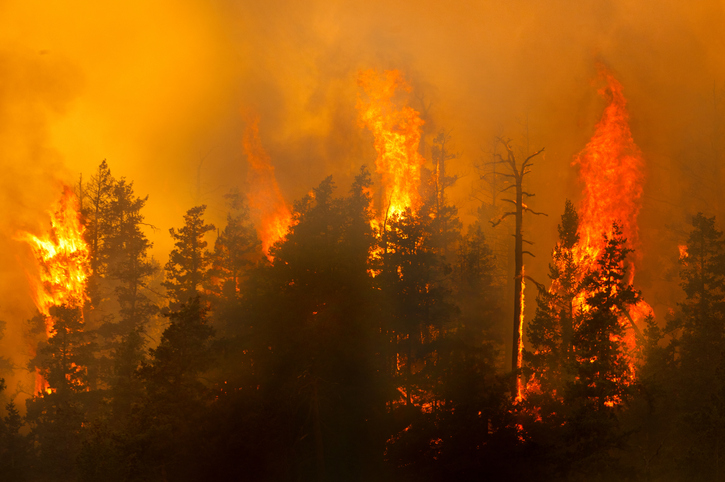
Yesterday, across much of Ontario, the reality of the climate crisis became impossible to ignore. As smoke from more than 140 active wildfires in Northwestern Ontario drifted south, it draped communities in a sickly, dark orange haze and a heavy, apocalyptic smell that made international headlines. Toronto briefly recorded some of the worst air quality on the planet, a stark reminder of the immediate atmospheric toll of these massive burns.
But for Canadian water utilities, the real crisis of a wildfire often begins long after the skies clear and the active flames are extinguished. When a severe burn sweeps through a source watershed, it doesn’t just damage timber; it resets the baseline parameters of raw water chemistry and hydrology for up to a decade.
For water professionals and municipal engineers, adapting to this reality is no longer a future-proofing exercise—it is an immediate operational necessity.
The hydrological shift
An undisturbed forest acts as a massive hydrological buffer. Healthy soil and root systems soak up precipitation and regulate its release. But high-intensity burns cook the soil, vaporizing organic compounds that then condense on cooler soil particles below.
This process leaves behind a highly waxy, hydrophobic (water-repellent) layer. The implications for water utilities are immediate:
- Flashier hydrographs: Lacking soil infiltration, rainfall quickly turns into high-velocity overland runoff. This scours the landscape, carrying heavy loads of sediment, ash, and woody debris directly to intake grates.
- The legacy ash problem: Silt and particulate-bound contaminants don’t wash through the system in a single season. They settle into reservoirs and riverbeds. Every subsequent spring freshet or heavy summer storm remobilizes this legacy ash, triggering sudden water quality spikes for 10 to 14 years post-fire.
What’s hitting the intake?
Post-fire runoff completely alters the chemical profile of raw water, making conventional treatment trains highly vulnerable:
- High-reactivity DOC: Dissolved Organic Carbon (DOC) levels surge, but the real issue is its composition. Post-fire DOC is frequently highly aromatic and reactive, measured by elevated Specific UV Absorbance UV254 or SUVA).
- Nutrient pulses: Ash is rich in bioavailable phosphorus and nitrogen. When these wash into holding reservoirs, they act as fertilizer, driving eutrophication and raising the risk of toxic blue-green algal (cyanobacterial) blooms.
- Heavy metals: Fires mobilize metals historically locked in forest soils and biomass (particularly iron, manganese, and aluminum) drastically increasing dissolved metal concentrations at the plant.
The treatability challenge
For water plants designed around historically stable raw water profiles, post-fire water forces operators to manage constant, unpredictable spikes:
- Coagulation disruption: High-SUVA carbon and unpredictable turbidity spikes require massive increases in coagulant and polymer dosing, which rapidly accelerates sludge production and shortens filter run times.
- DBP formation: When chlorine disinfectants meet highly reactive, post-fire DOC, they generate elevated levels of carcinogenic Trihalomethanes (THMs) and Haloacetic Acids (HAAs). Managing this trade-off between pathogen inactivation and Disinfection By-Product (DBP) control is incredibly difficult.
- WUI infrastructure failure: In the Wildland-Urban Interface (WUI), direct thermal damage to underground PVC or HDPE water pipes can cause in-situ thermal degradation (pyrolysis), leaching volatile organic compounds like benzene directly into the local distribution system.
Engineering resilience
Despite the scale of the challenge, Canadian researchers and utilities are deploying novel, highly adaptive solutions to maintain water security.
Transitioning to biological filtration
Conventional water plants rely on chemical coagulation to trap organic carbon physically. However, when post-fire DOC surges, chemical treatment can only do so much.
Pioneering work by the forWater Network has shown that converting conventional filters into biologically active filters (biofiltration) provides an elegant process buffer.
- By cultivating natural, active biofilms on the filter media, plants can biodegrade the highly reactive, low-molecular-weight organic carbon fractions that typically slip through conventional filters.
- This biological digestion reduces downstream DBP formation without requiring massive chemical upgrades.
Predictive AI and upstream sensor networks
Instead of reacting to water quality changes after they hit the intake, utilities are looking upstream. By deploying real-time sensor arrays in high-risk catchments, operators can monitor turbidity and UV254 in real time.
- When these sensors detect an incoming ash plume during a rainstorm, machine learning algorithms calculate the exact chemical adjustment needed.
- The plant’s dosing systems automatically scale coagulant feed rates before the contaminated plume even reaches the intake.
Natural barriers and active forest management
Rather than treating contaminated water, some utilities are stopping the contaminants at the source.
- Biochar interceptors: Active pilot studies are evaluating biochar barriers—using charcoal made from salvaged, fire-damaged timber—installed along burned hillsides to adsorb heavy metals and sediment from runoff before it reaches streams.
- Proactive fuel reduction: Utilities like the City of Calgary work in tandem with provincial forestry agencies to execute prescribed burns and fuel management. By keeping forest fires low-intensity and close to the ground, they prevent the canopy-level heat required to sterilize the soil and create hydrophobic conditions.
Technical resources & leading Canadian research
For water professionals looking to dive deeper into the data, the following networks and studies represent the cutting edge of Canadian post-wildfire water research:
Research Networks
- The forWater NSERC Strategic Network: Led by Dr. Monica Emelko, this collaborative network focuses on how forest management and watershed protection directly impact downstream water treatability.
- The Southern Rockies Watershed Project (SRWP): One of the longest-running studies globally, analyzing the hydrological and water quality legacy of wildfires since the 2003 Lost Creek fire.
- Water Science, Technology & Policy Group: University of Waterloo’s leading pilot-scale laboratory analyzing water treatment resilience under “black water” runoff conditions.
Essential Reading & Joint Initiatives
- UBC Global Review (2026): Published in Science of The Total Environment, this study by de León Rábago, Li, and Tu (2026) tracks the multi-year persistence of water contaminants post-fire. Read the UBC Study Summary on drinking water risk.
- UBC Okanagan Hydrology Study (2026): Published in Forest Ecosystems, Dr. Adam Wei’s team outlines how fires disrupt seasonal streamflows. Read the UBC Okanagan News Release.
- Radionuclide Mobilization Joint Initiative: A collaboration between Canadian Nuclear Laboratories (CNL), Environment and Climate Change Canada, and Health Canada tracking how wildfire ash redistributes natural radionuclides into source waters.
- Practitioner Guidance: The National Collaborating Centre for Environmental Health (NCCEH) offers risk-management toolkits specifically designed for water utility operators recovering from wildfire impacts.