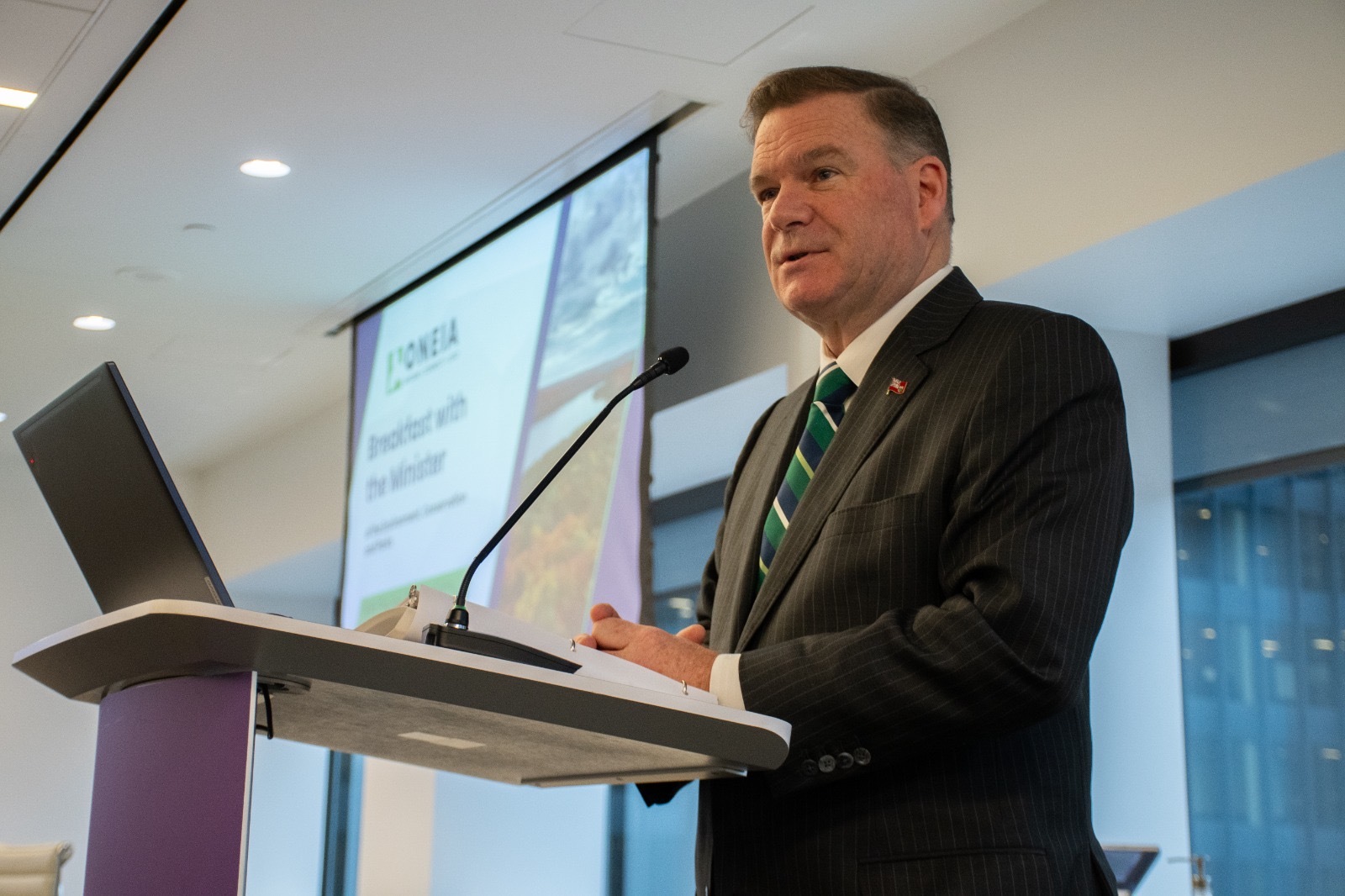
Ontario’s environment minister Todd J. McCarthy stressed the importance of streamlining the environmental assessment process at a recent industry event.
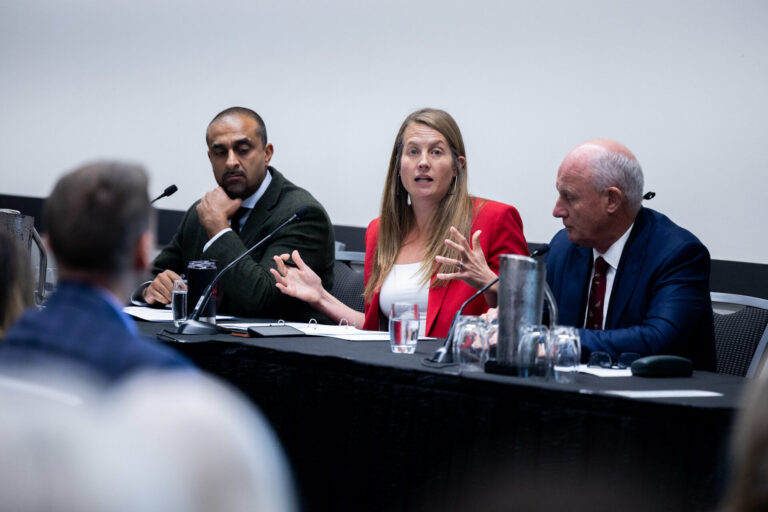
The Ontario Environment Industry Association (ONEIA), which represents the business interests of Ontario’s environment industry, hosted McCarthy at its inaugural “Breakfast with the Minister” event on March 16 in Toronto with Ontario environmental and cleantech professionals in attendance.
McCarthy cited rising population numbers and a concurrent need for increased infrastructure as an impetus to revamp the province’s environmental assessment process.
“When the Environmental Assessment Act came into effect in 1975, it was the first legislation of its kind in Canada. But in the decades since, the regulatory landscape has evolved significantly, creating duplication, overlap, and lengthy delays,” McCarthy said.
“Today, a comprehensive environmental assessment can take up to six years to complete. Streamlined assessments generally take between six and eighteen months. That is why we are proposing practical, sensible changes that maintain strong environmental oversight while reducing delays on projects that matter most, particularly critical water and wastewater infrastructure,” he said.
McCarthy said the government has previously exempted low risk projects, reduced approval duplication and enabled more projects to follow streamlined assessment processes.
The government is also focusing on modernizing permissions, he said.
“Building on recent success, we are streamlining permissions by exempting low risk projects, allowing proponents to self register certain activities in minutes, rather than waiting up to a year for ministry review, adopting a consolidated approvals process for municipal sewage and stormwater infrastructure and issuing more flexible, outcomes based approvals,” he said.
McCarthy also spoke to the need to make waste disposal part of the circular economy and reduce dependence on U.S.-based landfills.
“As many of you know, roughly 40 per cent of Ontario’s industrial, commercial, and institutional waste is still exported to landfills in Michigan and New York. My ministry is exploring options to address landfill capacity concerns and reduce reliance on US landfills, accelerating our shift toward a circular economy,” he said.