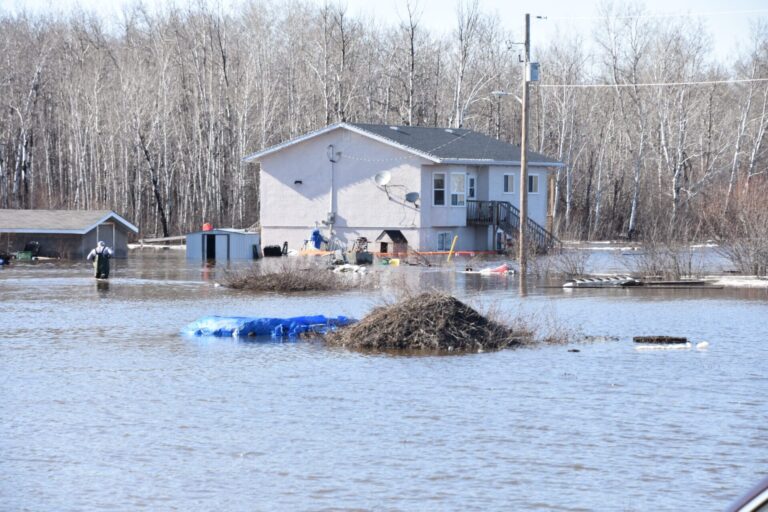
In May 2018, spring flooding in Grand Forks, B.C. devastated the community, resulting in widespread damage to homes and businesses. The impacts of this disaster forced over 3000 residents to evacuate, with extensive damage to over 500 homes, destroying critical infrastructure and disrupting essential services. As extreme weather events become more frequent and severe, the community came together to rebuild and strengthen its infrastructure to help create a more resilient future for the years ahead.
In the immediate aftermath of the flood, work first began to relocate residents to safer locations. What followed was a drive to build new, stronger infrastructure that could better withstand and manage future spring thaws and floodings. Through extensive floodplain analysis, the community began to better understand where rising flood waters would go, significantly influencing the development of a mitigation plan to strengthen future flood mitigation and response.
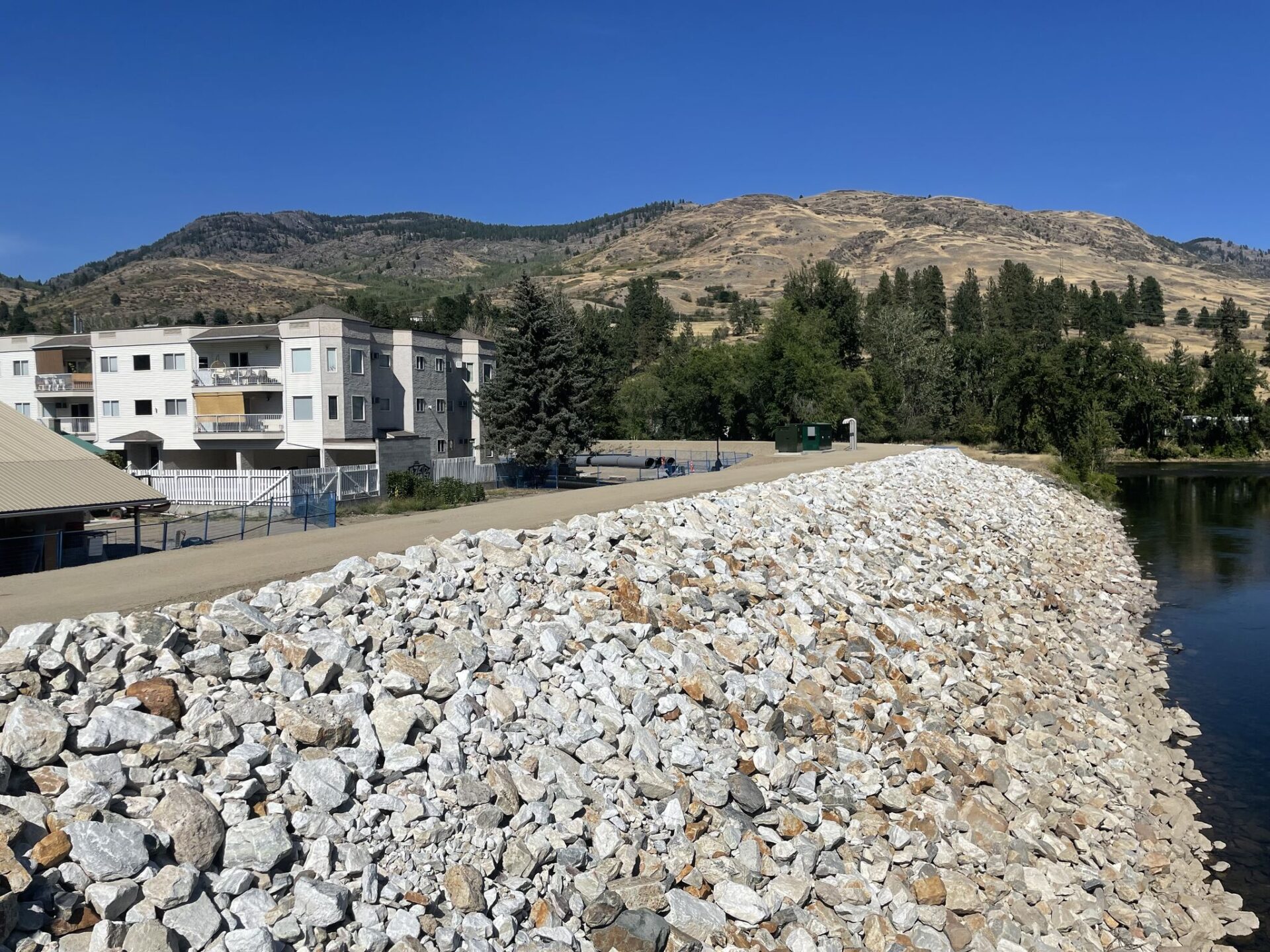
The plan included the construction or reinforcement of over three kilometres of new dykes in strategic areas to help protect homes and businesses from rising waters. Further mitigation work included a new drainage system to help remove excess high groundwater and stormwater from downtown, supported by 1.7 kilometre of reinforced riverbank within the city, a re-established natural floodplain in North Ruckle, and a new drainage system in South Ruckle. The installation of fish habitat structures and planting of 28,000 trees and shrubs along the Kettle and Granby River channel banks and riparian areas provides further protection of the area’s wildlife and natural environment.
“In the wake of the devastating 2018 flood, we made a commitment to rebuild stronger and reduce the risks posed by future flood events. Today, our neighbourhoods, businesses, industries and critical infrastructure are better protected because of that commitment and the strong partnership between the city, the Province, the federal government and our community,” said Everett Baker, Mayor of Grand Forks.
With the completion of this flood mitigation project, more than 400 Grand Forks residents are now protected from future flooding and extreme climate-related events, including river levels exceeding those recorded in 2018.
“People in Grand Forks and their neighbourhoods are much safer with the completion of these projects, which are the result of good collaboration between the city, the Province and the federal government,” said Kelly Greene, B.C. Minister of Emergency Management and Climate Readiness. “The success of the Grand Forks Flood Mitigation Program shows what’s possible when all levels of government work together to reduce risk to people and communities that are experiencing the consequences of a changing climate.”
The completed Grand Forks Flood Mitigation Program consists of:
- More than three kilometres of diking, 390 metres of stormwater mains, two permanent stormwater pump stations capable of removing 3,040 litres per second and more than 500 metres of stormwater management and drainage improvements were constructed.
- Ten hectares of floodplain were restored to create room for the river to spread between the new dikes downtown and south of the Kettle River. It included purchasing the 66-home North Ruckle neighbourhood and removing houses, foundations, roads, utilities and the existing dike from 1974 that overtopped and breached in 2018.
- Seventy residential properties and 20 vacant properties were acquired, and more than 20 statutory rights of way on provincial and private property to support the construction of dike and drainage systems. Nineteen homes were relocated to new properties.
- A 1.8-hectare off-river bypass channel was created to reduce flood risk, the installation of fish habitat structures, and 28,000 trees and shrubs were planted along the channel banks and nearby areas.
For the Grand Forks Flood Mitigation Program, the Province contributed nearly $29 million initially and another $2.6 million for downtown protective works. It was followed by four grants totalling more than $8 million from the Community Emergency Preparedness Fund (CEPF). The Regional District of Kootenay Boundary also received approximately $815,000 from the CEPF for this work.
The federal government provided nearly $20 million from the Disaster Mitigation and Adaptation Fund. The City of Grand Forks contributed a total of $9 million.
Featured image: (City of Grand Forks)