The management of biosolids—the nutrient-rich organic materials resulting from wastewater treatment—represents one of the most significant challenges facing modern municipalities. As urban populations grow and environmental regulations become more stringent, wastewater treatment facilities must adopt innovative approaches to transform what was once considered waste into valuable resources.
Understanding Biosolids
Biosolids are the organic solid materials produced during the treatment of municipal wastewater. After wastewater undergoes primary and secondary treatment processes, the remaining solids are stabilized through various methods including anaerobic digestion, aerobic digestion, composting, or lime stabilization. When properly treated to meet regulatory standards, these materials can be beneficially reused rather than disposed of in landfills or incinerators.
The composition of biosolids makes them particularly valuable for agricultural and land application purposes. They contain significant amounts of nitrogen, phosphorus, and other essential nutrients, along with organic matter that improves soil structure, water retention and long term soil health. However, biosolids also require careful management due to potential concerns about pathogens, heavy metals, and emerging contaminants.
Overview of Pelletization
Pelletization represents an advanced biosolids treatment process that transforms dewatered biosolids into dry, granular pellets. This technology provides numerous advantages over traditional biosolids management approaches, including reduced volume and weight, elimination of odours, destruction of pathogens, and creation of a product that is easier to store, transport, and apply.
At the core of the pelletizing process is a process vessel known as a dryer. Dewaterred biosolids (20-30% dry solids) are fed into the dryer which is kept oxygen free and at high temperature. The heat in the dryer results in the evaporation of water and volatiles while the movement of the biosolids results in the formation of a hard spherical granule. Once sufficiently dried the product exits the dryer for screening and cooling. This fertlizer can now be stored in bulk or packaged for shipment to the end user.
The high temperatures involved in thermal drying (typically 135-200°C) effectively destroy pathogens and reduce the presence of organic contaminants, resulting in a Class A biosolids product that meets the most stringent regulatory requirements for unrestricted use.
Veolia’s Ashbridges Bay Biosolids Pelletization Facility
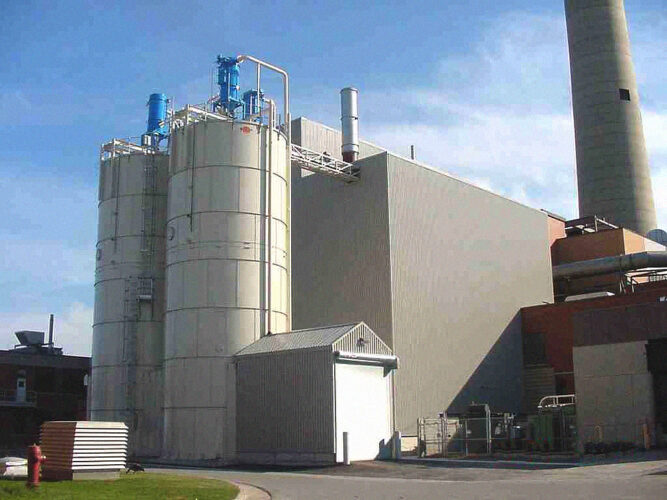
The City of Toronto’s Ashbridges Bay Wastewater Treatment Plant serves as a premier example of large-scale biosolids pelletization. Located on the shores of Lake Ontario, Ashbridges Bay is one of the largest wastewater treatment facilities in Canada with a rated capacity of 818Ml/d and serving approximately 1.5 million residents.
Prior to the pelletization facility, Toronto faced significant challenges in biosolids management. The city had historically relied on incineration, land application and landfilling, but these options became increasingly constrained due to regulatory pressures, public concerns, and limited available land. In the early 2000s, Toronto initiated a comprehensive review of biosolids management alternatives, ultimately selecting pelletization as the preferred long-term solution.
Veolia was selected to design, build, and operate the biosolids pelletization facility through a public-private partnership. The project represented a significant investment in sustainable infrastructure, with construction beginning in 2005 and the facility commencing operations in 2007.
Technical Specifications and Process
The Ashbridges Bay pelletization facility is designed to process approximately 75 dry tonnes of biosolids per day, making it one of the largest facilities of its type in North America. The process begins with anaerobically digested and dewatered biosolids from the treatment plant, which arrive at approximately 25-30% solids content.
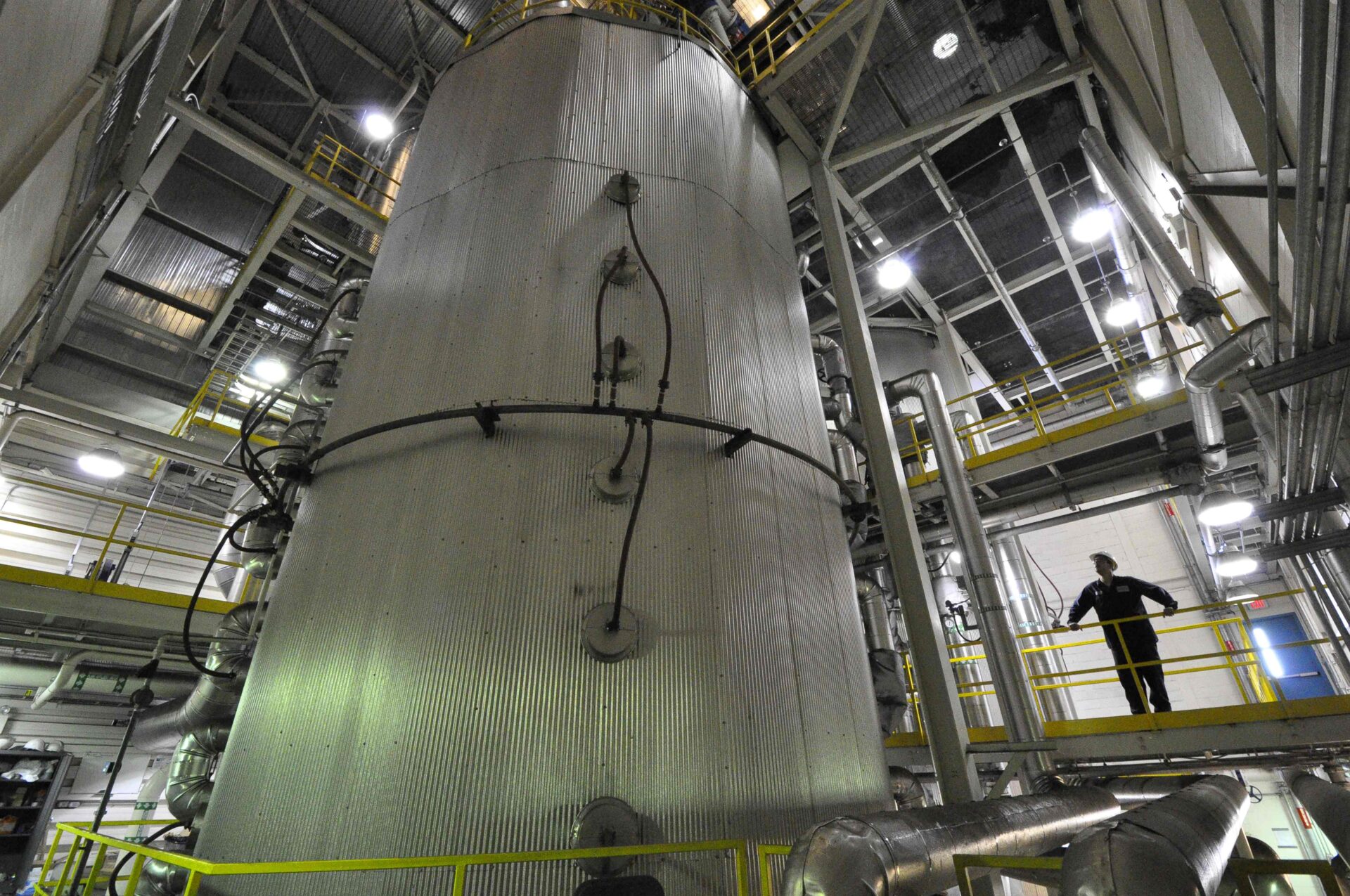
The facility employs a multi-tray hot oil system for thermal drying and pelletization. Biosolids are fed into the top of the furnace and gradually move downward across multiple trays, where they are exposed to temperatures ranging from 135-150°C. The high temperatures serve to remove moisture and destroy pathogens and organic contaminants.
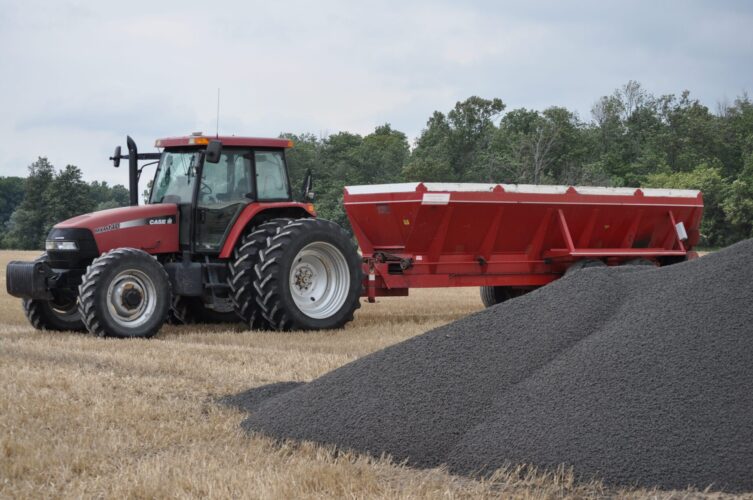
As the material moves through the dryer, it is continuously mixed and agitated by rotating rake arms, ensuring uniform heating and drying. The dried material exits the furnace at approximately 95% solids in the form of a hard spherical pellet typically 2-4 mm in diameter and has a dark brown to black appearance.
Environmental and Operational Benefits
The Ashbridges Bay pelletization facility has delivered substantial environmental and operational benefits:
- Volume and Weight Reduction: Pelletization reduces biosolids volume by approximately 75% compared to dewatered cake, significantly decreasing transportation costs and carbon emissions associated with hauling.
- Odour Elimination: The high-temperature process destroys odour-causing compounds, eliminating the nuisance odors associated with traditional biosolids management. This has been particularly important given the facility’s urban location.
- Pathogen Destruction: The thermal process produces Class A biosolids that are sold under the Canadian fertilizers Act as a commercial fertilizer and meets the most stringent pathogen reduction requirements, allowing for unrestricted use without site-specific permitting.
- Product Quality and Marketability: The pelletized product is uniform, easy to handle, and can be marketed as a fertilizer product. Toronto markets its pellets under the brand name Nutri-Pel which is used in agriculture, horticulture, and land reclamation applications.
Challenges and Lessons Learned
Despite its successes, the Ashbridges Bay facility has faced challenges that provide valuable lessons for similar projects:
- Capital and Operating Costs: Pelletization requires significant capital investment and has higher operating costs compared to some alternatives. The facility’s economics depend heavily on avoided disposal costs and potential revenue from product sales.
- Air Emissions Management: The high-temperature process generates air emissions that require sophisticated pollution control systems. The facility employs scrubbers, baghouses, and other technologies to meet stringent air quality standards.
- Operational Complexity: The facility requires skilled operators and sophisticated process control systems to maintain optimal performance and product quality.
- Market Development: Creating sustainable markets for pelletized biosolids requires ongoing effort in product promotion, quality assurance, and customer relationship management.
The Path Forward
Biosolids pelletization exemplifies the transition from linear “take-make-dispose” models to circular approaches that recover resources and minimize environmental impacts. As cities continue to grow and face increasing pressure to manage waste sustainably, integrated approaches combining pelletization, and other advanced technologies will play crucial roles in creating resilient, resource-efficient communities.
The success of these programs depends on careful technical design, supportive regulatory frameworks, sustainable economics, and ongoing innovation. The lessons learned from pioneering facilities like Ashbridges Bay provide valuable guidance for municipalities considering similar investments, while continued research and development promise further improvements in performance, efficiency, and sustainability. For more information, please visit www.veolia.ca
Veolia Receives Water Environment Association of Ontario (WEAO) Award for Operational Excellence for Biosolids Facility
Veolia, in collaboration
The award celebrates more than 15 years of innovation in biosolids management and the circular economy in action. Since 2007, Veolia’s dedicated team at Ashbridges Bay has been transforming biosolids — a byproduct of wastewater treatment — into Nutri-Pel, a commercial fertilizer that boosts crop yields by up to 40% while improving soil health and reducing dependence on synthetic chemical fertilizers.
What began with 8,000 tonnes of Nutri-Pel produced in 2008 has grown to 22,000 tonnes produced annually, supplying a customer base of 200 farmers across southern Ontario — with demand continuing to rise.
“This recognition is a testament to the hard work and dedication of our team, many of whom have been with this project since day one,” said Nicolas Germond, CEO Veolia Canada “What we’ve built at Ashbridges Bay is a true example of the circular economy — taking what was once considered waste and turning it into a product that delivers real agricultural and environmental value.”
The Nutri-Pel program exemplifies Veolia’s commitment to ecological transformation by keeping valuable nutrients in the ground where they belong, diverting biosolids from landfill, and supporting sustainable agriculture in Ontario.
Germond added: “The management of biosolids represents a significant challenge facing modern municipalities. As urban populations grow and environmental regulations become more stringent, Veolia is working with Canadian municipal wastewater treatment facilities to adopt innovative approaches to transform what was once considered waste into valuable resources.”
Veolia extends its sincere gratitude to the City of Toronto, whose collaboration and vision have been instrumental in the program’s continued growth and success.
Michael Vujicic, Project Manager, Toronto Biosolids & Business Development, Municipal Services Ontario, Veolia North America (Canada)