At industry conferences, the most revealing sessions are rarely the ones polished into neat corporate case studies.
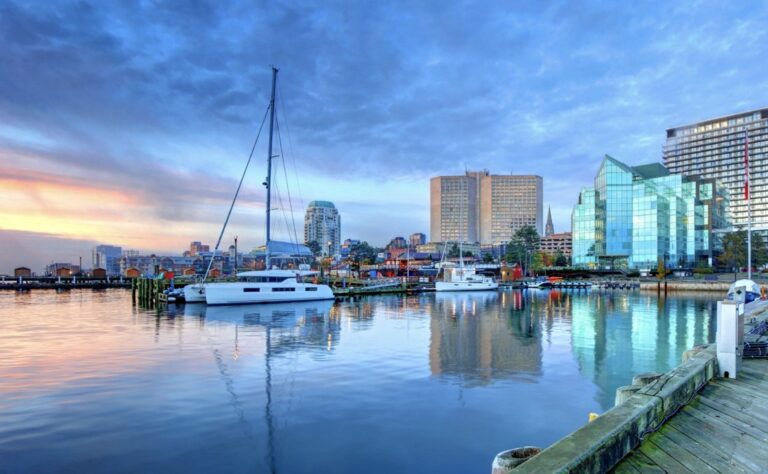
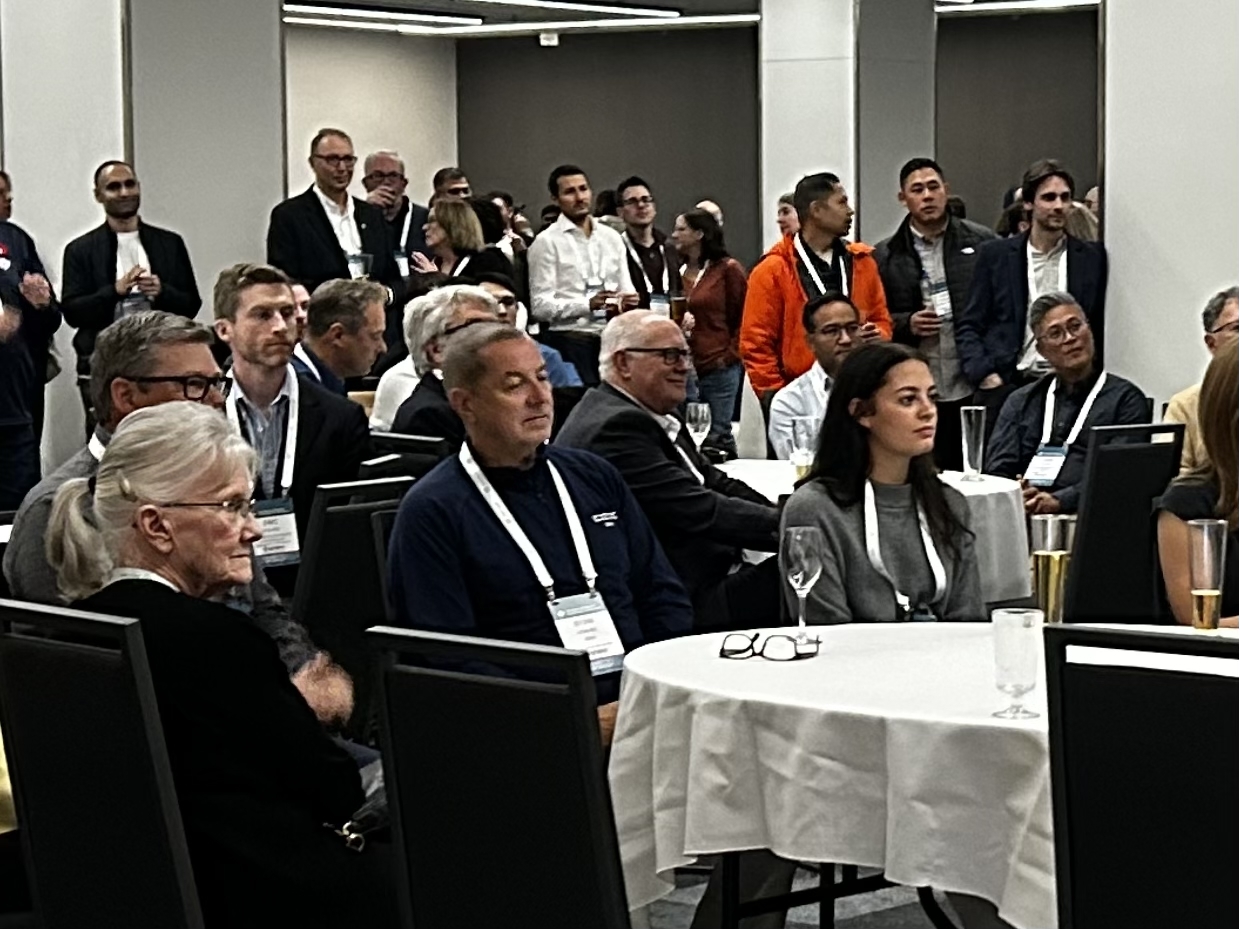
Today at the National Water and Wastewater Conference (NWWC) in Halifax, our room was packed wall-to-wall for an entirely different reason: municipal owners, contractors, and regional program directors spent an hour doing something far rarer—comparing actual scars, testing theory against reality, and addressing the friction points everyone in Canadian water infrastructure navigates behind closed doors.
Here is what water infrastructure delivery actually looks like when you cut through the theory.
Delivery models
Over the last few years, our sector has developed an understandable crush on collaborative delivery. Progressive Design-Build (PDB), Construction Management at Risk (CMR), and Integrated Project Delivery (IPD) dominate the podiums as though traditional procurement belongs in a museum.
The room offered a healthy reality check: scale dictates strategy.
“Contractors have a return-on-investment threshold for dedicated, open-book teams,” noted Ryan Johnson, President and CEO at Buffalo Pound Water Treatment Corp., offering a regional utility owner lens. “The practical lower bound for heavy collaborative models isn’t $20 million—it’s closer to $100 million or $150 million.”
For smaller municipal projects, the heavy front-loaded transactional overhead of full IPD will eat you alive.
“Does the administrative machinery of IPD make sense on a $20 million plant upgrade?” asked Mike Abbott, Vice President, Water Treatment at CBCL, addressing regional and Maritime realities. “Probably not. But taking hybrid elements—joint risk registers, early constructability reviews, selective open-book mechanisms—and baking them into conventional contracts? That’s where the real value lives.”
“In markets across Atlantic Canada, municipal teams are lean and contractor pools are close-knit,” Abbott added. “You can’t burden a local utility with massive transactional and legal machinery just to achieve collaboration. The sweet spot is borrowing the best collaborative habits without bringing the administrative baggage.”
Commercial agility
Even across massive capital programs, delivery theory frequently collides with hard market realities.
Lou Di Gironimo, General Manager at Toronto Water, shared an eye-opening example of commercial agility. On a $268 million project initially moving through staged Guaranteed Maximum Price (GMP) gates, design reached 100 per cent before final pricing was locked down. Rather than defaulting to the GMP path, Toronto Water requested both a GMP and a fixed lump sum.
“We chose the lump sum to save administrative cost and reallocate resources directly to site supervision,” Di Gironimo explained. The pivot saved an estimated $15 million (roughly 8 to 9 per cent of the contract value) which went straight toward putting more resident engineers on-site where the pipe meets the trench.
Meanwhile, post-COVID supply chains have dismantled simple assumptions about novation. Panelists pointed out that while pre-purchasing equipment can beat schedule creep, contractors frequently push back on novation when tariffs and murky country-of-origin percentages create pricing volatility. When novation stalls, smart owners pivot to direct pre-purchasing and package unbundling to preserve competitive bidding in smaller contractor pools.
Uncomfortable truth
Perhaps the sharpest moment of the session came when the conversation turned to climate resilience and municipal balance sheets.
Too often, sustainability panels offer polite assurances that climate mitigation can be absorbed through clever design. Di Gironimo delivered the unfiltered truth:
“I don’t think you can address climate change properly and keep it within the same budget.”
High lake levels and intensified storms have already forced Toronto Water to re-run hydrodynamic models and redo environmental assessments mid-stream, triggering expensive delays. The only way to survive that reality isn’t magical cost-cutting; it’s director-level prioritization: deliberately factoring realistic escalation into long-term capital plans and pushing back non-essential work to fund non-negotiable climate retrofits.
How do you future-proof without bankrupting ratepayers?
“Do not assign performance risk to contractors prematurely,” urged Sorin Manta, Manager, Engineering Support Division with the Region of Durham. “Do the geotechnical homework upfront, pre-purchase long-lead steel and mechanical packages, and design low-cost provisions into current footprints, like reserving tank space for future Membrane Aerated Biofilm Reactor (MABR) retrofits, so you aren’t forced to rebuild the plant twice.”
The gold standard in capital efficiency isn’t spending more; it’s dual-purpose infrastructure. Di Gironimo pointed to Toronto’s CSO program: by engineering a tunnel to serve both wet-weather overflow storage and a temporary bypass, the city was able to isolate and rehabilitate 5 kilometers of the aging Coxwell trunk sewer (servicing 800,000 residents) without building a redundant twin line. That sequencing decision alone saved an estimated $200 million.
Real challenge
When asked to name the single most underappreciated challenge in the Canadian water sector, the panel didn’t cite technical specs, concrete costs, or SCADA upgrades.
They pointed to the people.
“Plant operations staff are the unsung heroes of this entire sector,” emphasized one regional operations leader on the panel. “We ask them to maintain uninterrupted, 24/7 regulatory compliance inside 50-year-old facilities while contractors are tearing up the ground around them to build new expansions. The operational overtime and strain are real.”
Layer on an aging contractor base, aggressive competition for skilled trades from subsidized megaprojects in healthcare and defense, and a general public that only notices their water when the pressure drops, and you have the makings of a quiet operational crisis.
“The public underrates the immense complexity of wastewater treatment until they see it firsthand,” Johnson reflected. “The moment you bring councillors and community members through a plant tour, the conversation shifts completely. Transparency creates ambassadors.”
Still learning
If there was one unifying thread across the panel, it was humility.
Whether managing a 74-site regional upgrade or a $3-billion metro tunneling program, nobody has cracked the code on collaborative models, supply-chain tariffs, or climate finance. Every utility in Canada is building the plane mid-flight.
The municipalities that thrive over the next decade won’t be the ones rigidly wedded to a single procurement playbook. They will be the ones agile enough to take a lump sum when overhead gets too heavy, bold enough to make tough budget cuts to protect climate resilience, and grounded enough to admit that behind every great engineering design stands an operator working overtime to keep the taps flowing.