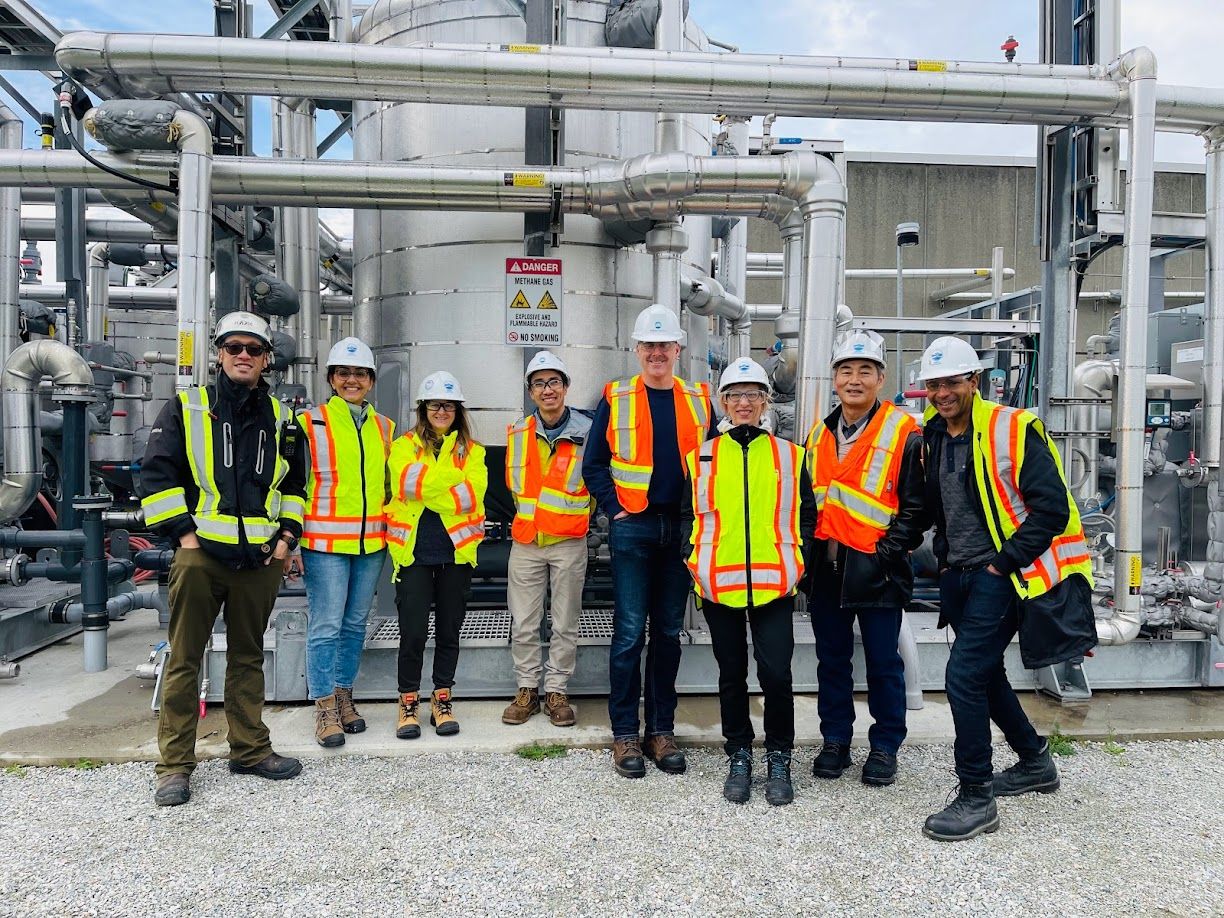
A Metro Vancouver pilot project to transform wastewater into biocrude oil has earned a $150,000 grant from the Water Research Foundation (WRF).
The funding will help explore how leftover materials from the wastewater treatment process can be transformed into fuel while reducing waste and advancing sustainability, a Metro Vancouver release said.
The overall process is called hydrothermal liquefaction (HTL) and the biocrude produced from waste can then be further refined into low-carbon liquid fuels for planes, ships, trains and trucks, a Metro Vancouver post explained.
Other Metro Vancouver facilities are already using biogas for heat and electrical generation. Annacis Island and Iona Wastewater Treatment Plants both use co-generation, the term for the process. The North Shore Wastewater Treatment Plant will employ the process as well once completed.
At the Lulu Island Wastewater Treatment Plant biogas is used for heating and a facility was installed at the plant in 2021 to clean up excess biogas and sell resulting renewable gas to Fortis BC.
Metro Vancouver is assessing how best to use the biogas at its other facilities, including the upgraded Northwest Langley and Iona Island Wastewater Treatment Plants, the post said.
There is enough excess heat in Metro Vancouver’s wastewater to heat about 700 high-rise buildings, the post added, and listed several projects to recover wastewater heat that are currently under design or in construction:
- Construction has started on the Sen̓áḵw District Energy System, which will recover waste heat from Metro Vancouver’s sewer forcemain in Vancouver.
- In Richmond, a project is being designed to recover heat that can used by residents and businesses in the Richmond Oval area.
- In the City of North Vancouver, a project is being designed that will recover waste heat from Metro Vancouver’s North Vancouver Interceptor sewer.
- Metro Vancouver is helping to fund a project with New Westminster that will recover heat and use it at the Royal Columbian Hospital and in the Sapperton District, a project in Surrey that will recover heat for district energy use in Surrey City Centre, and a project in Richmond that recovers sewer heat for use by residents and businesses in Richmond City Centre.
The WRF is a Denver, CO-based non-profit charitable and educational organization which funds, manages, and publishes research on the technology, operation, and management of drinking water, wastewater, reuse, and stormwater collection, treatment and supply systems.
Metro Vancouver received an Water Research Foundation award in 2020 that “recognized its innovative approaches and commitment to sustainability for a low carbon region,” the Metro Vancouver post said.