By Lauren Belayneh
During a recent Water Canada webinar—Biosolids to Benefits: Pelletization and the Circular Economy—municipal leaders, operators, researchers experts explored how cities can convert biosolids into valuable productzxss while addressing public perception, contaminants of emerging concern, operational challenges, climate policy and agricultural demand.
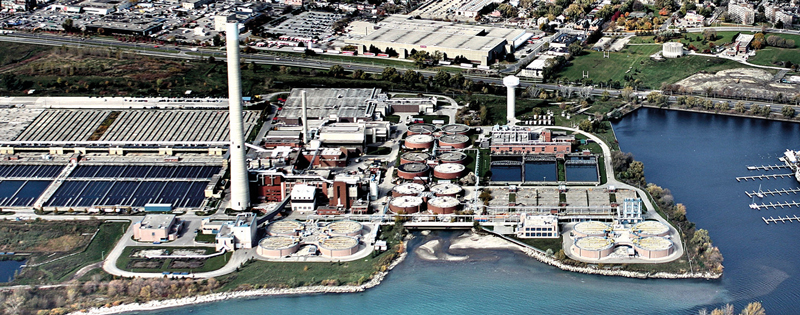
Sponsored by Veolia, the discussion highlighted Toronto’s 20-year pelletization program at the Ashbridges Bay Treatment Plant, along with broader insights relevant to municipalities nationwide as they transition away from landfilling or incineration.
Toronto has been pelletizing biosolids at Ashbridges Bay for over 20 years. Why did the city pursue this pathway, and how has the program evolved?
Peter Marto (City of Toronto): At one point, Ashbridges Bay used to incinerate all its biosolids. In 1998 the environmental assessment was conducted, and it was agreed that incineration was no longer acceptable for our facility and the City of Toronto. We produce approximately 150,000 dry tonnes of biosolids per year. One of the hardest parts for us was convincing the public and farmers to get over the stigma of using a human waste product as fertilizer. But we succeeded. Biosolids have now gone from a waste product to a commodity where farmers and others use it, see the results and see the savings.
What makes pelletization different from other biosolids management methods such as land application or incineration?
Michael Vujicic (Veolia): You don’t really find a lot of pelletizers out there, and because of that, the knowledge base around operating them well, operating them safely, operating them for long periods, really doesn’t exist. It’s not well documented. The only people that know pelletizers are the people who learned them through experience. Every facility treats water upstream in different ways, which affects the nature of the sludge you’re producing. Even though you’re using a similar technology from one city or municipality to the other, because of your upstream processes, you really are changing the dynamics of the sludge.
The lack of real industrial knowledge around the process, combined with the fact that it’s very site specific, really makes operating these types of facilities challenging.
From an agricultural and environmental science perspective, how do pelletized biosolids compare to conventional fertilizers?
Ryan Prosser (University of Guelph): One of the big things biosolids bring that synthetic fertilizers don’t is organic matter. They not only provide nutrients that plants need for growth, but they improve soil health and soil quality.
Vujicic: Soil is a living, breathing organism. Having macro- and micronutrients along with organic matter really makes these soils long-term sustainable. Synthetic fertilizers only return a specific nutrient like nitrogen or phosphorus—they don’t add to long-term health. People that are using this product can revitalize soils that had deteriorated.
What environmental benefits has Toronto observed from pelletization?
Marto: For every one truck of pellets that goes out, four trucks of 26 per cent biosolids would go out. That means fewer trucks on highways, reducing greenhouse gas emissions. We’re also at 100 per cent beneficial use… nothing goes to landfill.
Vuicic: By supplying this fertilizer that’s a recovered product, we don’t have to produce much more synthetic fertilizer. Producing fertilizer is a very energy-intensive process… And having a product in our local market means that we don’t have to ship fertilizers to get them to our local agricultural community.
Emerging contaminants—particularly PFAS and microplastics—are increasingly in the public eye. What does the science show about their presence and risk in biosolids?
Prosser: Metals, PFAS, microplastics, pharmaceuticals—these can be present in biosolids. It’s an issue of where they come from. Historically it was the Wild West: everything went down the drain and would end up at your wastewater treatment facility. But that has evolved. For the most part, if you have good source control, the levels of contaminants in biosolids are relatively low.
That’s not to say we shouldn’t continue to measure that on a regular basis and make sure that the levels don’t exceed concentration. But for the most part, if it’s done well, if best management practices are followed, the levels that you’re seeing in biosolids are relatively low.
In Maine, farmer soil was contaminated by forever chemicals… The issue was poor source control. When you dig into these extreme examples, something has malfunctioned—best management practices weren’t followed.
Does the pelletization process further contribute to contaminant breakdown in biosolids?
Marto: It does because of the heating process… that gets rid of much of the E. coli. By heating the biosolids up to 200-plus degrees Celsius before it turns into a pellet, that makes it a third grade A fertilizer that can be spread on any field.
Prosser: In terms of chemical contaminants, it just depends. There are certain processes that can degrade some microplastics. Polyester fibers don’t really do well under that high temperature, so it can reduce those in the product. And certain PFAS molecules can be broken down at elevated heat levels. But others are just more stable. It won’t contribute to the breakdown of metals, but pharmaceuticals, personal care products, that sort of stuff… majority of that will be broken down. That elevated heat is going to contribute to the degradation or dissipation of some contaminants.
And our process doesn’t add anything—so when we’re going through the dryers at Ashbridges Bay and the product is flowing through, we basically just evaporate water and volatiles that are coming off it. We don’t add anything. It’s really just the heating process.
Do you recapture the dehydrated water?
Vujicic: The water that we pull off when we’re drying ends up being condensed. So it is recaptured and circled back to the front of the wastewater treatment plant where it will go through the process again. It is being captured, recirculated and treated again.
Is there guidance available to farmers on safe storage practices?
Vujicic: We have developed best practices in terms of how to prevent reheating, which can be an issue. There are a number of things that we recommend people do to store it safely and reliably, depending on how long they’re going to keep it. We can put it in long grain bags… and long term storage can be done in large quantities because it’s airtight and watertight…. We’re very careful about people that are taking larger quantities to make sure they understand how to store it, how it might react under certain conditions, and make sure that they can deal with it. Because ultimately, this product still does have a lot of energy. If it gets wet, it can tend to reheat and cause issues. So managing it is critical.
For municipalities considering shifting from landfilling or incineration to resource recovery, what’s the first step?
Prosser: Look at classic contaminants. Do you have good source control? If you have elevated metals or PFAS, you need to address that upstream before land application or pelletization.
Vujicic: There are smaller communities around the province—some of them might have to take a bit of a regional approach, where between three or four townships, there’s enough quantity to do something.
Looking ahead, how do you see biosolids management evolving in Canada?
Marto: Right now the pellets are a high commodity. As the stigma gets removed and people see the benefits of utilizing this in land application processes, I think it’s just going to increase even more than what it is today.
Vujicic: I think landfilling biosolids is a thing of the past. Incineration might remain in specific cases… but people would like to get away from that because of the decarbonization movement. We’ve shown that we can create a product that closes that circular economy loop and gets the nutrients back in the soil. It’s a feel-good story from multiple perspectives.
Prosser: I think as we get more data, we’re able to provide a clearer story. That story is moving towards how beneficial it is.
To watch a replay of the entire discussion, visit:
https://www.crowdcast.io/c/biosolids-to-benefits
Lauren is the Associate Editor of Water Canada.
[This article appeared in the January/February 2026 issue of Water Canada.]
Featured image: Toronto’s Ashbridges Bay Treatment Plant uses a biosolids pelletization program to turn sewer sludge into fertilizer pellets, reducing waste, odor, and transportation costs. (Toronto and Region Conservation Authority)