By Laura Mirabella
The Ontario government has set a target for 1.5 million new homes by 2031 to accommodate population growth. Every subdivision, condo tower, or industrial park relies on something less visible than cranes or concrete: the water systems that make communities livable. Expanding treatment plants, extending pipes and renewing aging infrastructure all come with a price tag, and municipalities are tasked with figuring out how to pay for it.
For local governments, this is the critical challenge: how do we enable the growth our communities need while maintaining the infrastructure we already have and within a sustainable financial framework?
Growth and maintenance dilemma
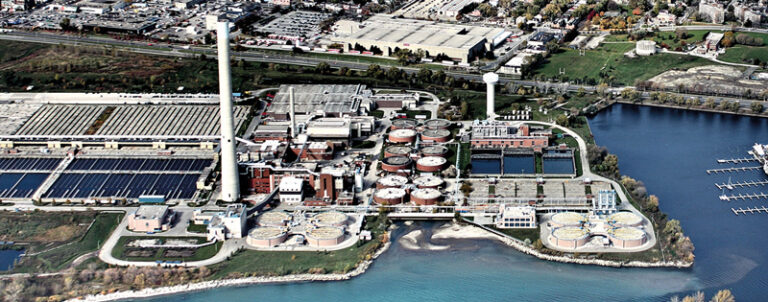
Every new home needs pipes to bring clean water in and take wastewater out. Water and wastewater systems are often one of the largest and most expensive infrastructure investments municipalities make. Treatment plants, pumping stations and underground networks require careful long-term planning and carry high operating costs.
New homes also need access to roads, transit and community facilities. In Ontario’s two-tier system, the upper-tier regions (e.g., York Region) typically build and finance the big-ticket items—like the water systems and arterial roads—while local municipalities (e.g., City of Markham) manage neighbourhood streets and local services like parks and recreation.
In York Region alone, the 10-year water and wastewater capital plan totals $4.6 billion, with more than two-thirds of that investment tied directly to growth-related projects. These are the pipes, pumping stations and treatment facilities that will make new housing possible.
The existing infrastructure is already decades old. In York Region, the rehabilitation and replacement cost for existing water and wastewater assets is $205.6 million for 2025. Communities must find the money to keep existing systems in good repair while also investing billions to service new residents. Add inflation, supply chain pressure and shifting regulations, and the balancing act becomes even harder.
For many municipalities, the math simply doesn’t add up. Debt limits constrain how much they can borrow. Development charges (DCs) don’t always cover the full cost of growth. And each new road, pumping station or treatment upgrade brings long-term operating costs.
This creates a familiar tension: how to encourage new housing and jobs, while ensuring the water systems people rely on every day remain safe, resilient and affordable.
Water and wastewater infrastructure funding cycle
With so much pressure on limited resources, understanding how municipalities fund and finance new systems is key. In fast-growing regions like York Region, water infrastructure follows a predictable rhythm. First, projects—like new trunk sewers or water mains—are planned and approved by Council before the next wave of development.
Because these systems need to be in the ground before homes can be built, the Region usually issues debt up front to cover the cost. Once developers move ahead with their projects, they pay development charges. Those fees are then used to pay down the debt, freeing up debt capacity for the next round of infrastructure.
This system ensures growth largely pays for itself, when it comes to water and wastewater. But when construction slows, costs rise faster than development charges, or debt capacity is stretched too thin, the cycle can stumble, resulting in pressure on both municipalities and developers.
Infrastructure policy and planning tools
If the funding cycle keeps growth moving, infrastructure planning tools make sure it happens in the right place, at the right time, and at the right cost. Municipalities rely on three main guides to steer their decisions:
- Master Plans
Supported by local municipalities, long-term blueprints look decades ahead. York Region’s Water and Wastewater Master Plan sets out how treatment plants, pumping stations and underground networks will be added, expanded and maintained to support growth to 2051. Endorsed by York Regional Council in 2022 and amended in 2025, it reflects provincial legislation that redirects wastewater flows to Lake Ontario and shifts drinking water planning away from Lake Simcoe. The plan is updated regularly to ensure infrastructure capacity, costs and growth forecasts stay aligned.
The link to the master plan is the Region’s capacity assignment cycle. Servicing capacity for new homes—essentially the water and wastewater “slots” available— is assigned to local municipalities, who then allocate it to developers. The next Region-wide capacity assignment, happening this year, is a critical step in aligning infrastructure investment with the province’s housing targets.
The master planning process also examines opportunities to stretch our infrastructure, sometimes called “infrastretching,” which entails finding ways to optimize and strategically enhance existing systems before committing to entirely new builds.
2. Corporate Asset Management Plans (CAMPs)
Required under provincial regulation, CAMPs ensure municipalities maintain the assets they already have. These plans answer questions like: What condition are our pipes in? When will we need to replace them? How can we extend their life at the lowest cost? York Region’s 2024 Corporate Asset Management Plan values its infrastructure at $28.8 billion with 90 per cent in fair or better condition. York Region has been successful at keeping its infrastructure in a state of good repair, because Council made a choice to ensure water rates include contributions to fund this crucial work.
3. Capital Plans
These are practical, multi-year budgets that turn vision into action. They lay out which projects will be built over the next decade and how they will be funded. York Region’s current plan commits $12.2 billion for water infrastructure.
Together, these tools help municipalities avoid overbuilding, prevent costly surprises and ensure water systems keep pace with community needs.
Funding and financing tools
When it comes to building infrastructure, deciding what to build is only half the equation. The other half is figuring out how to pay for it, especially for the big-ticket water and wastewater projects that keep growth moving.
Funding is the money municipalities collect to cover those costs. For water and wastewater, this comes from a mix of property taxes, user rates on water bills and development charges (DCs) paid by developers when new homes are built and added to the system. But DCs don’t cover the full cost of growth. Recent provincial legislation reduced what municipalities can collect through DCs, costing York Region an estimated $28 million every year. At the same time, water and wastewater rates are set to rise by 3.3 per cent annually in 2025 and 2026 to help cover ongoing renewal costs.
The result is a shifting balance: more pressure on homeowners and ratepayers, and less reliance on DCs.
Financing is about timing. A new wastewater facility might cost hundreds of millions up front, but the revenues to pay it off arrive slowly, as homes are built and occupied. To bridge the gap, municipalities use debt, reserves (savings set aside from water rates), or—in some cases—financing provided by developers themselves.
York Region’s fiscal strategy aims to keep growth sustainable. Debt is generally reserved for growth-enabling water and wastewater projects, while day-to-day upkeep and renewal are funded through dedicated reserves. This careful balance ensures the taps run today, while planning for the millions of litres of water and wastewater capacity that tomorrow’s communities will require.
The way forward
Growth in Ontario is certain and additional infrastructure will be needed to support this growth. The question is whether it will be managed in a way that communities can afford for both today and decades from now.
For municipalities, the answer lies in smart planning and disciplined financial management. By carefully deciding where and when to invest in new water systems, and by maintaining the infrastructure already in place, municipalities can meet ambitious housing targets without compromising long-term sustainability.
Meeting Ontario’s target of 1.5 million new homes depends on ensuring water and wastewater systems can keep pace. With the right balance of planning, funding and financing, municipalities can build for the future while keeping services safe, reliable and affordable for everyone.
Laura Mirabella is the Commissioner of Finance and Regional Treasurer at the Regional Municipality of York.
[This article appeared in the January/February 2026 issue of Water Canada.]
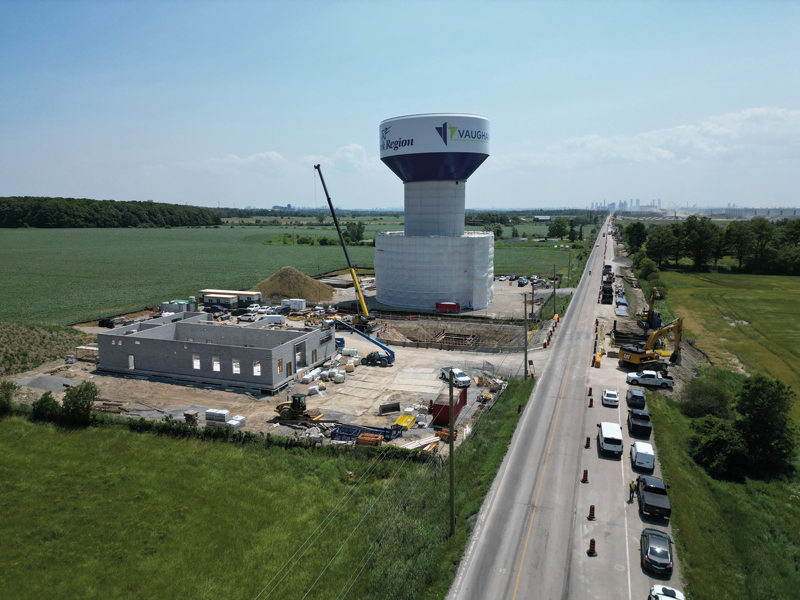
Featured image: When it comes to building infrastructure, deciding what to build is only half the equation. The other half is figuring out how to pay for it. (York Region)