A Quebec study puts a figure on the economic and social benefits of nature conservation. In southern Quebec, the activities of land trusts working on private land generate more than $48 million in value added, and conserved areas protect $22.6 billion in natural assets.
The new expert report Conserving Nature, Cultivating Prosperity: The socioeconomic benefits of Private Land Conservation in Quebec shows that conserved areas provide services beneficial to humans, also known as ecosystem services. They support jobs and reduce several climate risks — factors relevant to thinking about how resilient communities are to natural hazards.
The activities of members of the Regroupement des organismes de conservation du Québec (ROCQ), who work on private land conservation in southern Quebec, are measured by:
- 640 jobs in Québec.
- Most of the value added is generated within Quebec’s economy, totalling more than $48 million.
- Every dollar created by conservation activities generates 92 cents in value added in the rest of the economy. Proportionally, this ratio is like that of the construction industry.
- $678,300 million per year in ecosystem services provided by conserved natural areas, translating into $22.6 billion : the estimated present value of this natural asset generating perpetual returns.
- The present value of the services provided is at least 70 times greater than the average acquisition cost.
“Our study shows that conservation contributes both to today’s economy and to the natural capital our future prosperity depends on. The activities of these organizations support employment and value added, while conserved areas provide essential services to communities.” said François Delorme, Delorme Lajoie Consulting.
Conserved areas prevent flooding, improve air quality, store carbon, increase water supply, and protect biodiversity. Their degradation would shift major costs onto governments, private businesses, and municipalities. And yet the study’s figures are floor estimates: they do not fully capture the health, cultural, identity, and quality-of-life benefits that nature provides.
According to the study, commissioned by Nature-Action Québec on behalf of the collective of land trusts, investing in conservation kills three birds with one stone — stimulating the local economy, strengthening the climate resilience of communities, and avoiding major infrastructure costs, since conserved areas provide useful services to communities.
“Forest fires, flash floods, heat waves, and infrastructure damage remind us that conserved areas protect communities in many ways. Infrastructure built by humans will never be as effective. With the benefits now quantified, increasing conservation investment in southern Quebec is an opportunity to better support communities and foster their long-term resilience,” said Maryline Charbonneau, Director, Engagement and Impact Communications, at Nature-Action Québec.
“This study highlights what land trusts see on the ground: protecting nature generates tangible benefits for our communities. The results show that, beyond simple access to nature, the concerted action of land trusts across Quebec helps create wealth, support jobs, and strengthen the resilience and vitality of our communities,” added Brice Caillié, Executive Director of ROCQ.
“The results of the study are encouraging and illustrate the dynamics of the conservation community in Quebec. They confirm that land trusts contribute to community well-being and regional prosperity in many ways. These organizations and the benefits they provide deserve to be better known and recognized. Across Canada, more than 150 conservation organizations contribute to the country’s economic prosperity while protecting its identity,” adds Renata Woodward, executive director of the Alliance of Canadian Land Trusts (ACLT).
Achieving the goals of the Kunming-Montreal Global Biodiversity Framework, which notably calls for conserving 30% of lands and waters by 2030, also represents an opportunity to better recognize the economic value of conserved areas. The study’s findings underscore the value of:
- Recognizing conservation funding as a productive, high-return investment in natural capital.
- Integrating the value of ecosystem services into decisions on public projects.
- Partnering with conservation organizations as leading partners in achieving economic, climate, and biodiversity goals.
- Accounting for the economic, climate, and social benefits associated with conservation investments, making them high-return public policies.
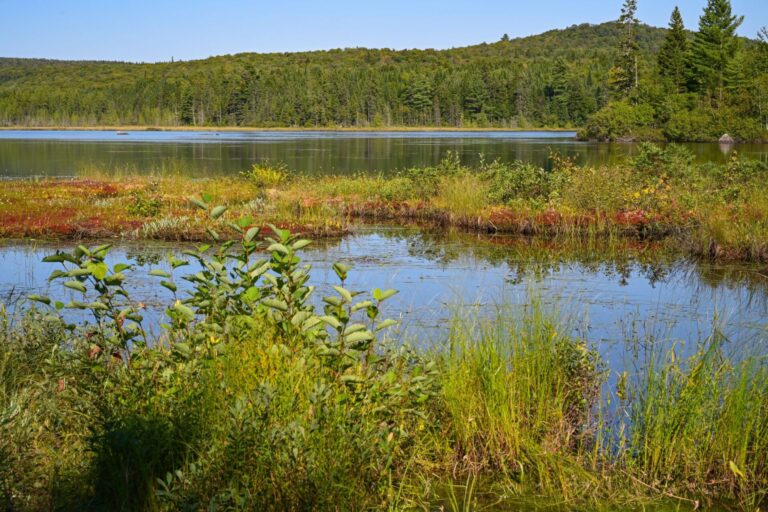
Featured image: (Ducks Unlimited Canada)