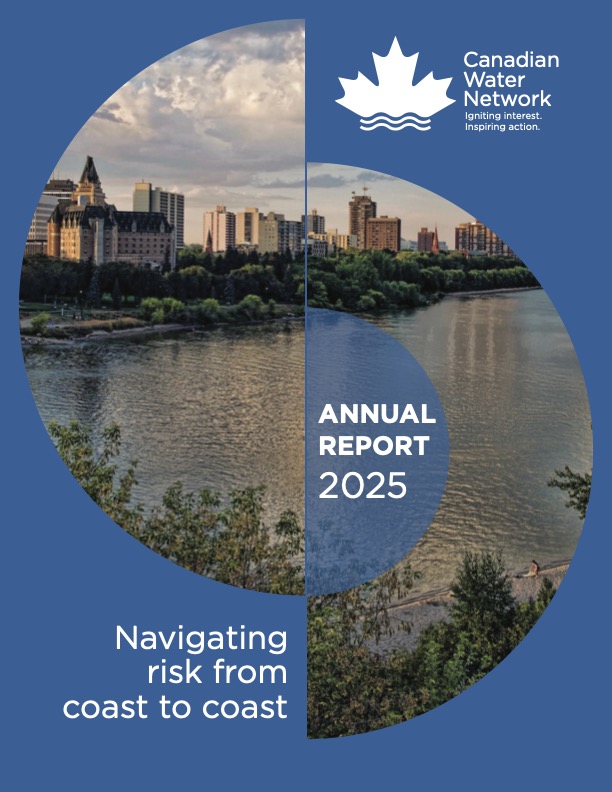
The Canadian Water Network has released its 2025 Annual Report, titled “Navigating Risk from Coast to Coast.”
The report noted shifting political and social priorities, uncertain economic conditions due to U.S. tariffs and ongoing labour shortages as creating “a challenging environment for leaders responsible for our essential water services.”
“Throughout the year, CWN supported members of the Municipal Water Consortium and participants — including professionals from the public health sector, municipalities, and utilities — to navigate uncertainty. Our efforts focused on strategies that strengthen fiscal, institutional, and physical resilience in water management,” CWN CEO Nicola Crawhall said.
The report’s highlights include a focus on the Municipal Water Consortium, a gathering of 26 large municipalities from across Canada, including Gatineau which joined the consortium in 2025.
The report also pointed to increased climate change risks as high-intensity rainfall, drought, flooding and wildfires continue to disrupt water systems along with the need for utilities to reduce greenhouse has (GHG) emissions.
CWN also pointed to an ongoing partnership with the National Collaborating Centre for Infectious Diseases to share water-based surveillance (WBS) data and wastewater analysis with public health practitioners and provincial agencies to assist with their decision-making processes.
Other CWN highlights included hosting the Blue Cities 2025 conference, which focused on risk management and introduced the inaugural CWN Water Leaders Awards. The organization also began its first year in the Partnership Accreditation in Indigenous Relations (PAIR) program and achieved charitable status for the Canadian Water Network Foundation.